
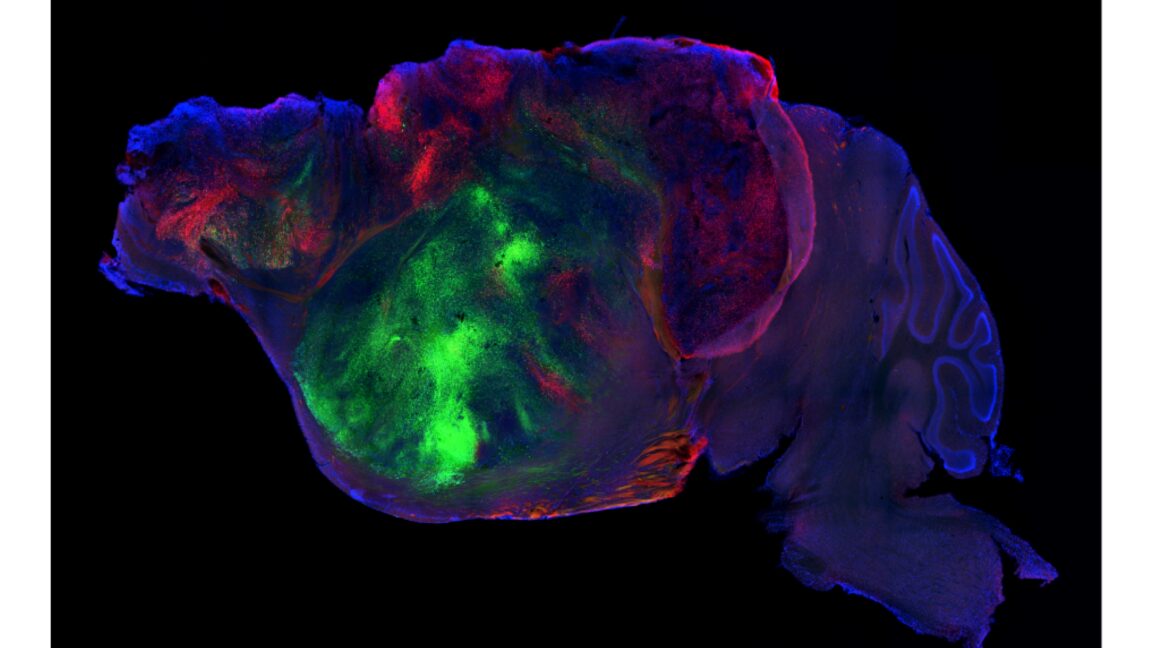
Researchers at Stanford University have developed a novel method to study human brain development and disease by integrating human brain organoids into the cortex of mice. While organoids—three-dimensional tissue structures derived from stem cells—have become valuable tools for modeling human biology, they often lack the complex environmental interactions found in a living organism, such as circulatory systems or immune responses. By genetically modifying a mouse to create space in its brain and replacing that tissue with human organoid cells, the team aims to create a more natural context for these cells to develop. This approach allows researchers to observe how human brain cells integrate into a functional neural network, potentially providing deeper insights into neurological conditions. This breakthrough addresses significant limitations of traditional in vitro models, offering a more sophisticated platform for understanding the complex interactions that define human brain function and pathology.
This is a summary. Read the full article at the original source:
Ars TechnicaRelated stories

NASA has officially canceled the ambitious Mars Sample Return (MSR) mission, a flagship project intended to retrieve geological samples collected by t…

In a recent episode of the Mindscape podcast, Google VP Blaise Agüera y Arcas discussed fundamental questions regarding the origin of life through the…

The letter 'W' holds a unique position in the English alphabet, distinguished by its complex origins and unusual phonetic evolution. Unlike most lette…