
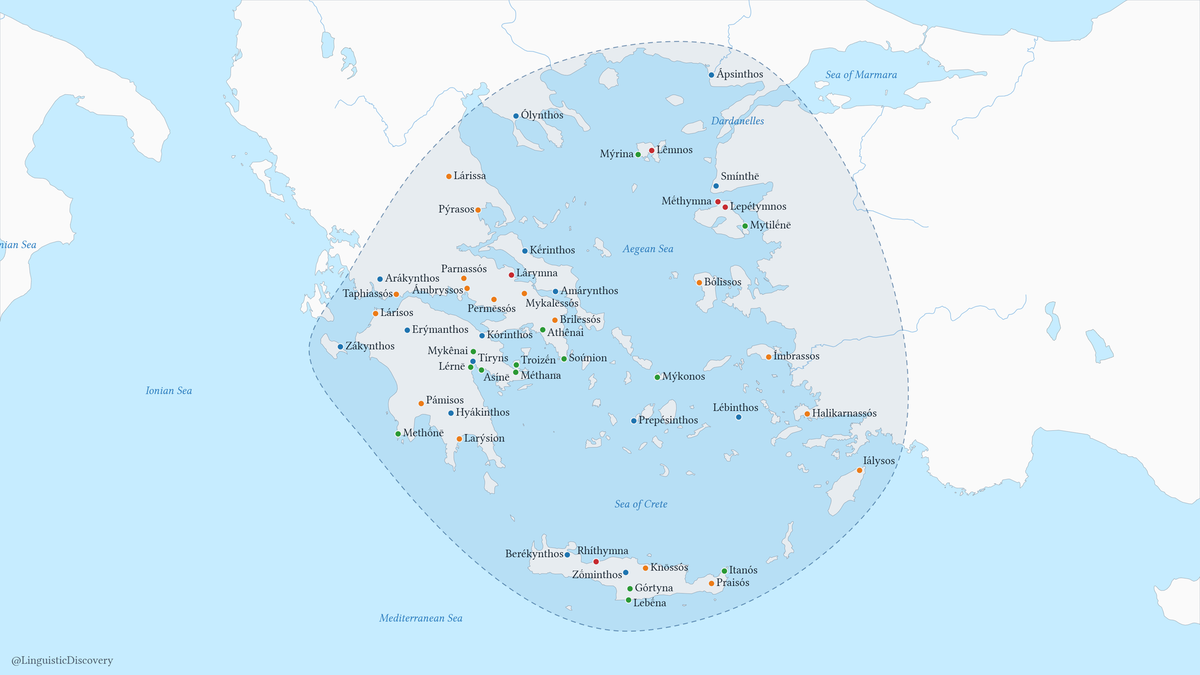
Linguistic research has long suggested that the Ancient Greek language contains a significant substratum of non-Indo-European vocabulary. This 'Pre-Greek' language, often referred to as Pelasgian, represents the remnants of the indigenous populations living in the Aegean region before the arrival of Greek-speaking tribes. Scholars analyze loanwords related to agriculture, flora, fauna, and topography to reconstruct the features of this lost tongue. By examining specific phonetic patterns and suffix structures that do not conform to standard Indo-European roots, researchers are uncovering a complex linguistic layer that shaped the development of the Greek language. This study provides critical insights into the cultural and social landscape of the Bronze Age Mediterranean, highlighting the integration of diverse populations. Understanding these linguistic traces allows historians to better map the migration patterns and societal shifts that occurred throughout the Aegean basin thousands of years ago.
This is a summary. Read the full article at the original source:
Hacker News (YC)Related stories

NASA has officially canceled the ambitious Mars Sample Return (MSR) mission, a flagship project intended to retrieve geological samples collected by t…

In a recent episode of the Mindscape podcast, Google VP Blaise Agüera y Arcas discussed fundamental questions regarding the origin of life through the…

The letter 'W' holds a unique position in the English alphabet, distinguished by its complex origins and unusual phonetic evolution. Unlike most lette…