
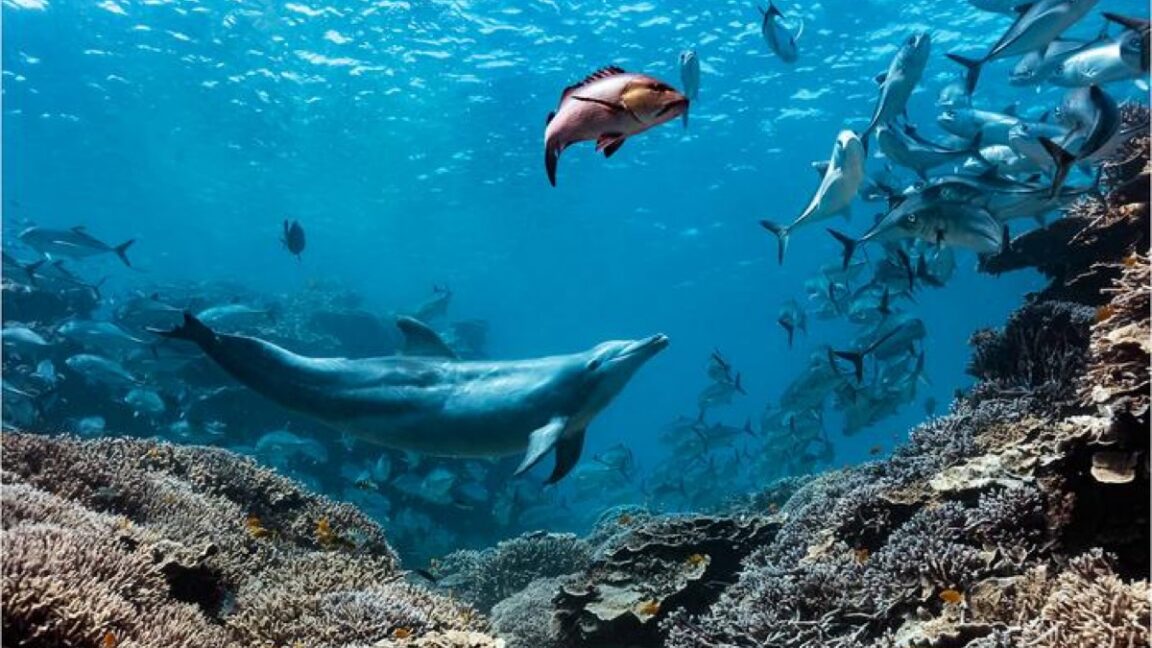
Researchers have documented a unique case of kleptoparasitism involving a bottlenose dolphin named Bubbles, residing near Australia's Lady Elliott Island. According to a study published in Ecology and Evolution, the dolphin actively harasses bigeye trevally, stressing the fish until they regurgitate their consumed food, which Bubbles then consumes. Co-author Asia Haines of the University of the Sunshine Coast notes that this behavior challenges the common anthropomorphic perception of dolphins as inherently benevolent creatures. While the behavior may seem aggressive, researchers classify it as a form of kleptoparasitism—a survival strategy observed in various species, including birds, bears, and insects. The study highlights that dolphins are opportunistic predators, and such interactions are part of natural ecological dynamics rather than anomalies. This research serves as a reminder that wild animals prioritize survival strategies over human-projected moral standards.
This is a summary. Read the full article at the original source:
Ars TechnicaRelated stories

NASA has officially canceled the ambitious Mars Sample Return (MSR) mission, a flagship project intended to retrieve geological samples collected by t…

In a recent episode of the Mindscape podcast, Google VP Blaise Agüera y Arcas discussed fundamental questions regarding the origin of life through the…

The letter 'W' holds a unique position in the English alphabet, distinguished by its complex origins and unusual phonetic evolution. Unlike most lette…