
In this article, the author examines the nature of objects at the centers of galaxies, traditionally classified as supermassive black holes. The focus is on the dwarf galaxy Hen 2–10 (also known as ESO 495–21), located 27 million light-years from Earth in the constellation Pyxis. Unlike many other galaxies where black holes consume matter, Hen 2–10 exhibits an unusual process: the supermassive black hole acts as a catalyst for active star formation. The author analyzes how the influence of such objects on the surrounding space changes our understanding of galactic evolution. The article offers a critical look at accepted astrophysical models, emphasizing that the interaction between black holes and interstellar gas can lead to the rapid birth of new stars, debunking the stereotype that black holes are solely 'eaters' of matter. This research opens new horizons in studying the mechanisms of star system formation in the early universe.
This is a summary. Read the full article at the original source:
HabrRelated stories

In a thought-provoking post on his personal blog, renowned mathematician Terence Tao explores the potential future of mathematics and science in the e…
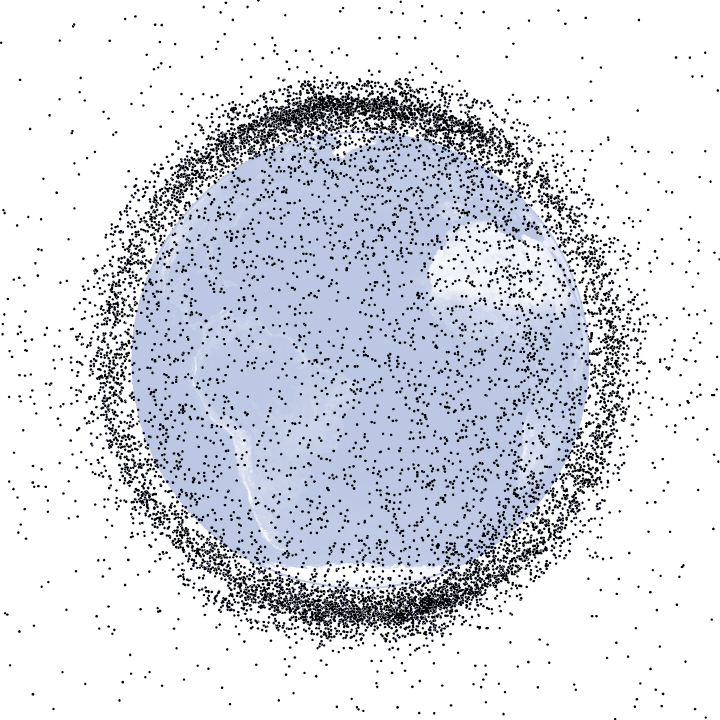
There are about 17,000 active satellites in Earth's orbit, but the space is also filled with a vast amount of orbital debris, including spent rocket s…
The author presents a revised version of their article dedicated to a deep understanding of quantum mechanics. The material is based on Richard Feynma…