
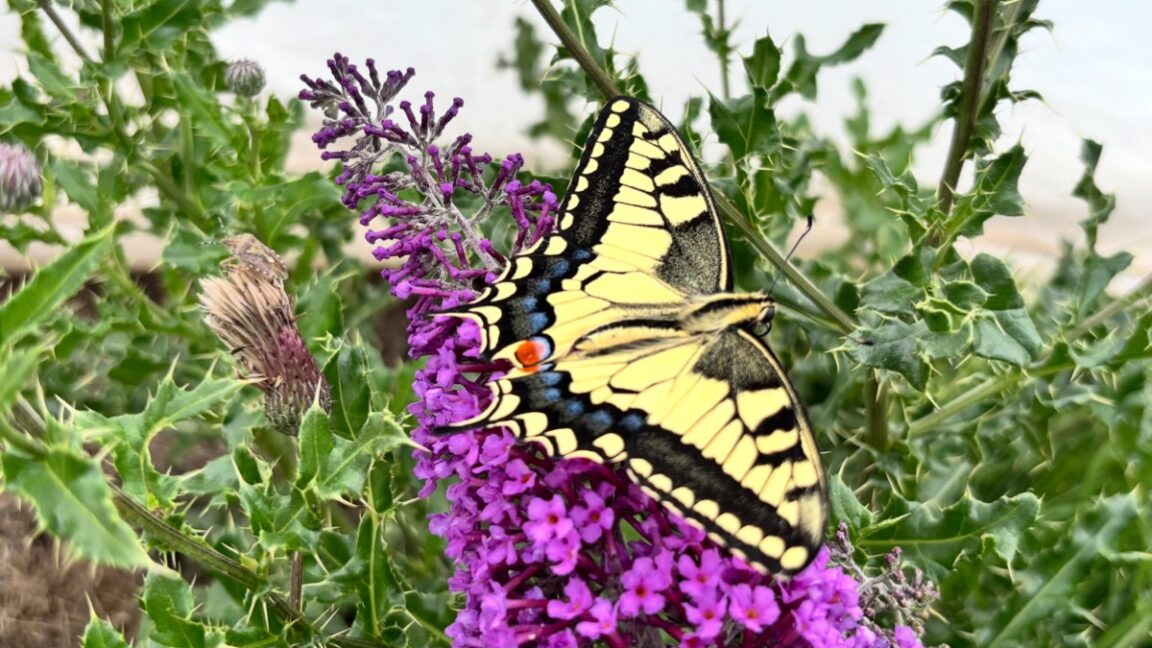
A new study published in Nature reveals that the visual patterns on butterfly wings function similarly to the optical illusion seen in rotating barbershop poles. Researchers from the University of Exeter found that these patterns disrupt a predator's ability to accurately perceive the speed and direction of a butterfly in flight. By creating false motion cues, the wings interfere with the visual targeting systems of birds, often causing them to miss their prey during the final moments of an attack. Beyond their defensive utility, butterfly wings are also noted for their structural color, which arises from photonic crystals rather than pigments. This research highlights the complex evolutionary adaptations of butterflies, building on previous scientific milestones such as the 2021 MIT study that captured the structural growth of wings within a chrysalis.
This is a summary. Read the full article at the original source:
Ars TechnicaRelated stories

Google researchers have introduced a new method to watermark AI-designed proteins, addressing growing biosecurity concerns regarding the misuse of gen…

The author shares observations on cloud behavior in the mountains of Krasnaya Polyana during the summer. Unlike winter conditions, summer air contains…

A recent post on Andrew Gelman’s blog highlights the extraordinary academic output of Nicholas Polson, who has reportedly authored 258 academic papers…