
Visualizing Italo Calvino's Invisible Cities with Opus 5.5
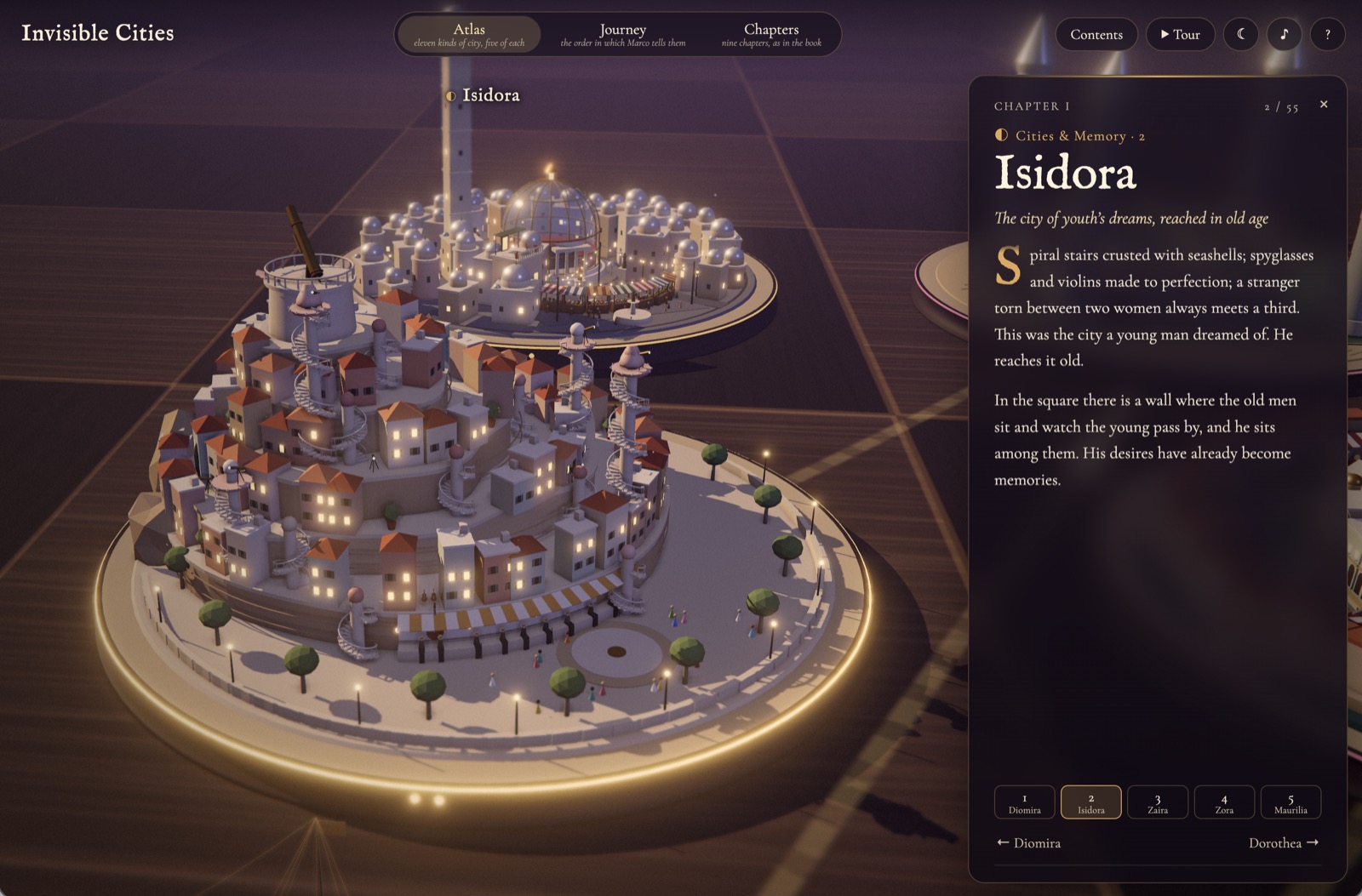
The team at Quesma recently conducted an experimental project to test the creative capabilities of the Opus 5.5 large language model. By providing a single, comprehensive prompt, they tasked the AI with visualizing the surreal and abstract landscapes described in Italo Calvino's classic literary work, 'Invisible Cities.' Over a six-hour period, the model generated a series of complex visual interpretations based on the text's intricate descriptions. This experiment highlights the evolving potential of generative AI in bridging the gap between abstract literature and visual art. The project serves as a case study for how modern LLMs can interpret nuanced, poetic language to produce coherent visual outputs, demonstrating both the creative strengths and the current limitations of prompt-based generative systems in artistic workflows.
This is a summary. Read the full article at the original source:
Hacker News (YC)Related stories

Google’s AI note-taking app transcribes your meetings completely offline
Google has introduced an experimental note-taking application, Google AI Edge Foresight, designed to transcribe meetings and audio files entirely offl…

ChatGPT introduces 'Intelligent UI' with interactive elements
OpenAI has quietly rolled out a significant update to ChatGPT, introducing an 'Intelligent UI' powered by GPT-6. This feature shifts the platform from…

Meta expands Muse AI agent to iPad with new business-focused features
Meta has officially brought its agentic AI assistant, Muse, to the iPad, following its initial mobile launch in September. The update introduces deepe…