
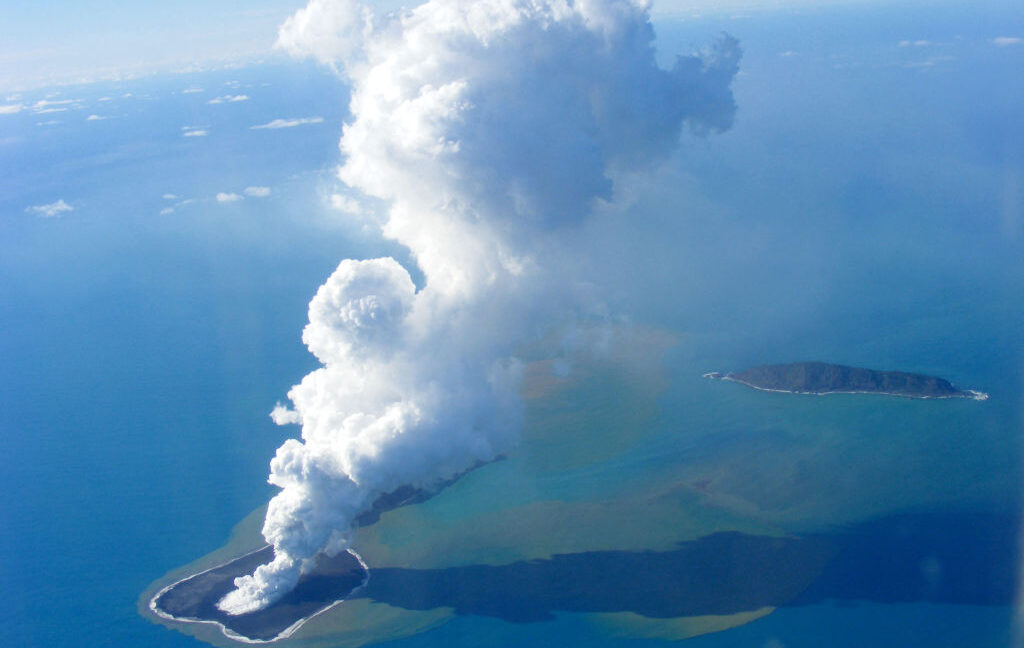
A recent study investigating the 2022 Hunga eruption in Tonga highlights how undersea volcanoes can generate unexpectedly powerful tsunamis. While deep-ocean eruptions are often suppressed by high water pressure, volcanic activity near the surface can trigger violent explosions. Researchers focused on the rapid caldera collapse during the Hunga event, where a four-kilometer-wide section of the seafloor sank by approximately one kilometer as magma drained away. By comparing seafloor topography before and after the eruption, the international team demonstrated that such structural collapses play a critical role in amplifying tsunami waves. This research provides essential insights into the mechanics of volcanic hazards, suggesting that even relatively small undersea volcanoes possess the potential to cause significant destruction through displacement of water. Understanding these geological processes is vital for improving tsunami warning systems and assessing risks for coastal communities located near active volcanic regions.
This is a summary. Read the full article at the original source:
Ars TechnicaRelated stories

Pedro Duque, Spain’s first astronaut and a former Minister of Science, Innovation, and Universities, has been named an IEEE honorary member. The recog…
Following the Trump administration's decision to defund the US Global Change Research Program and halt the National Climate Assessment, scientific org…

NASA Administrator Jared Isaacman has emphasized that the agency must adopt a more selective approach to international partnerships as the lunar race…