
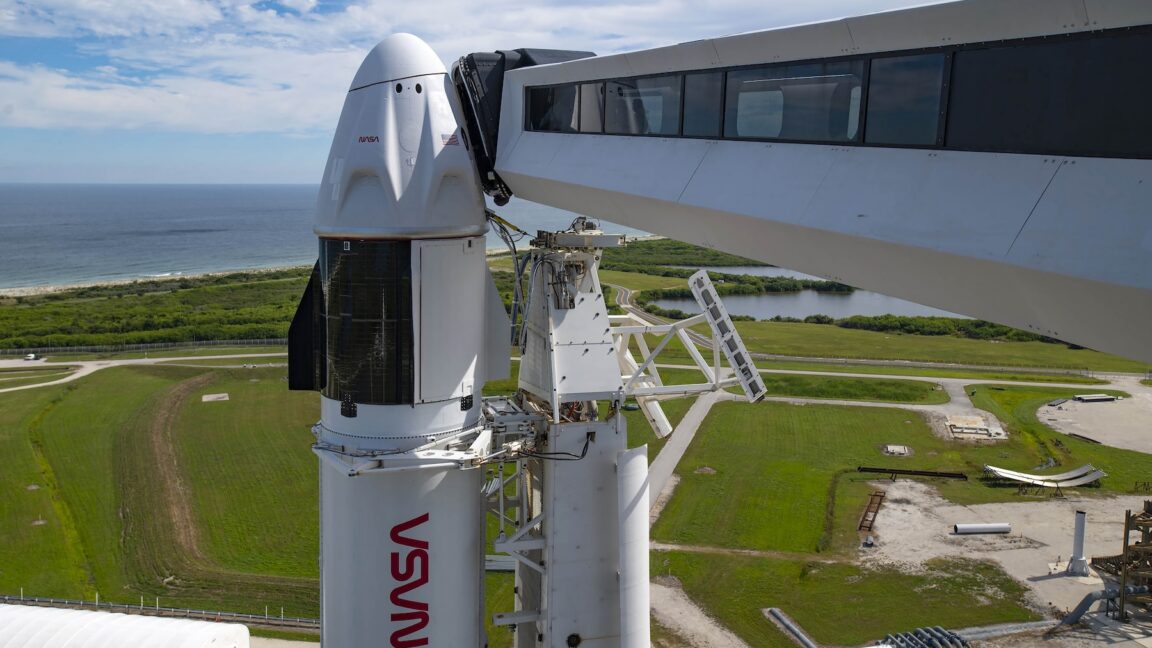
For two decades, NASA has worked to foster a commercial economy in low-Earth orbit, primarily by supporting private spacecraft development for cargo and crew delivery to the International Space Station. The agency's goal was to stimulate a robust ecosystem where NASA acts as one of many customers rather than the sole operator. However, the agency now faces a significant dilemma regarding its reliance on SpaceX's Dragon spacecraft. As NASA attempts to transition toward a future where multiple commercial entities provide transportation, manufacturing, and tourism services, the dominance of a single provider creates strategic challenges. The agency must balance its commitment to fostering innovation and competition with the practical necessity of maintaining safe and reliable access to orbit. This situation highlights the difficulties in transitioning from a government-led space program to a market-driven commercial model, leaving NASA with few easy answers for its long-term orbital strategy.
This is a summary. Read the full article at the original source:
Ars TechnicaRelated stories

A recent post on Andrew Gelman’s blog highlights the extraordinary academic output of Nicholas Polson, who has reportedly authored 258 academic papers…

A recent study published in Nature reveals that dietary habits during the larval stage significantly impact the lifespan of fruit flies. Researchers l…

The Download: Climate tech companies to watch and the debate over AI-driven scientific discovery
MIT Technology Review’s latest newsletter highlights the upcoming release of its 2026 'Climate Tech Companies to Watch' list, focusing on innovations…