
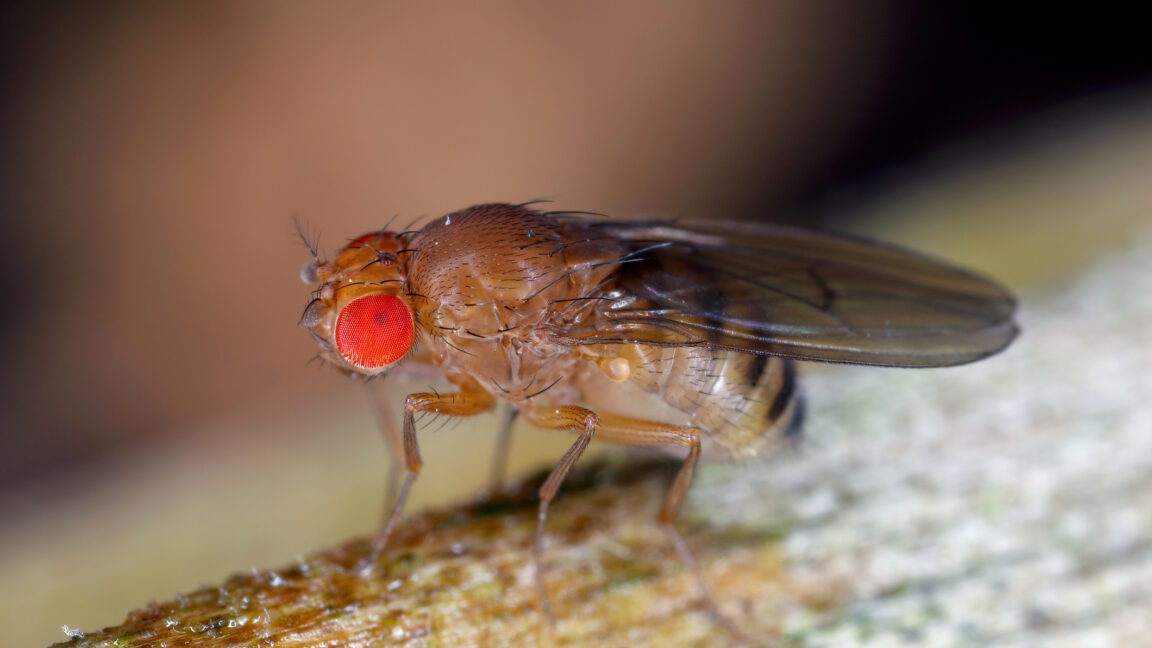
A recent study published in Nature reveals that dietary habits during the larval stage significantly impact the lifespan of fruit flies. Researchers led by Fumiaki Obata at the RIKEN Center for Biosystems Dynamics Research discovered that reducing protein intake during the maggot phase leads to increased longevity in adulthood. By lowering yeast concentrations in the diet of larvae from eight percent to one or two percent, the team observed that the flies lived longer even after returning to a standard diet upon reaching adulthood. The study identified a specific protein that acts as a biological record, carrying the nutritional history from infancy into the adult life stage. This finding provides new insights into how early-life environmental factors influence long-term health and aging processes, suggesting that metabolic memory plays a crucial role in determining the lifespan of organisms.
This is a summary. Read the full article at the original source:
Ars TechnicaRelated stories

A recent post on Andrew Gelman’s blog highlights the extraordinary academic output of Nicholas Polson, who has reportedly authored 258 academic papers…

For two decades, NASA has worked to foster a commercial economy in low-Earth orbit, primarily by supporting private spacecraft development for cargo a…

The Download: Climate tech companies to watch and the debate over AI-driven scientific discovery
MIT Technology Review’s latest newsletter highlights the upcoming release of its 2026 'Climate Tech Companies to Watch' list, focusing on innovations…