
Your RAG Finds the Documents. But Which Ones Should Reach the LLM?

In Retrieval-Augmented Generation (RAG) systems, the initial retrieval process often gathers a large volume of document chunks, not all of which are equally relevant to a user's query. This article explains the critical role of reranking in optimizing RAG pipelines. While the retriever efficiently narrows down a vast database to a set of candidate chunks using vector embeddings, the reranker—typically a cross-encoder model—performs a more precise evaluation. By pairing the query with each individual chunk, the reranker assigns a relevance score, allowing developers to sort and prioritize the most pertinent information before sending it to the Large Language Model (LLM). This two-step approach of fetching followed by ranking ensures that the LLM receives the highest quality context, ultimately improving the accuracy and effectiveness of AI-generated responses in complex systems.
This is a summary. Read the full article at the original source:
Dev.toRelated stories

Anthropic and OpenAI announce more powerful and cheaper AI models
In a significant development for the generative AI sector, both Anthropic and OpenAI have unveiled new, more capable models that also offer improved c…

Overreliance on AI contributed to missile strike on Iran school – Pentagon
A recent Pentagon investigation has concluded that an overreliance on artificial intelligence systems was a significant contributing factor in a missi…
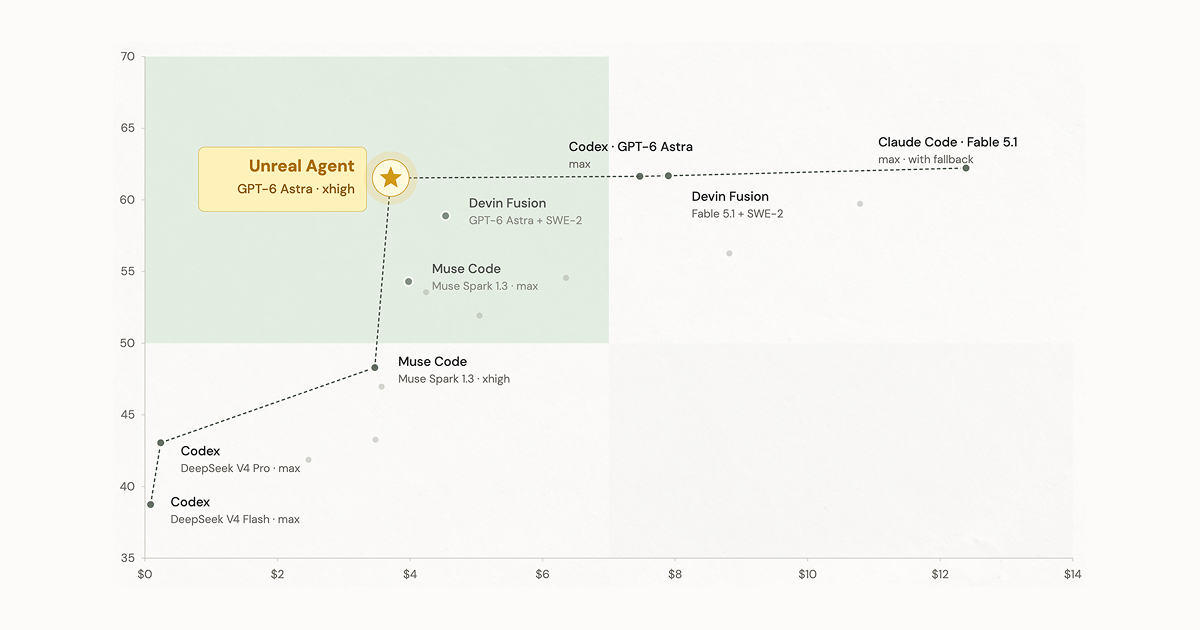
Unreal Labs has introduced Unreal Agent, a new platform designed to bridge the gap between complex AI reasoning and real-world execution. The project…