
When Code Gets Cheap, Verification Becomes Expensive: How AI Changes the Economics of Software Architecture

As AI coding agents drastically reduce the cost of generating software, the economic focus of development is shifting. Author Remo Jansen argues that while implementation speed is increasing, the recurring cost of verifying code correctness remains a significant challenge. Because software requires ongoing verification during refactoring, migrations, and updates, the author suggests that 'verifiability' must become a first-class architectural concern. Instead of relying solely on tests, developers should design systems where invalid states are unrepresentable through strong typing, schemas, and explicit state machines. By moving verification into the architecture itself, teams can reduce the burden of manual checks and ensure long-term system reliability. Ultimately, the goal is to build software that is not only easy to generate but, more importantly, easy to continuously prove correct in an era of rapid, AI-driven change.
This is a summary. Read the full article at the original source:
Dev.toRelated stories

This article by Haulmont explores the evolution of Business Process Management (BPM) systems. The authors argue that traditional static process diagra…
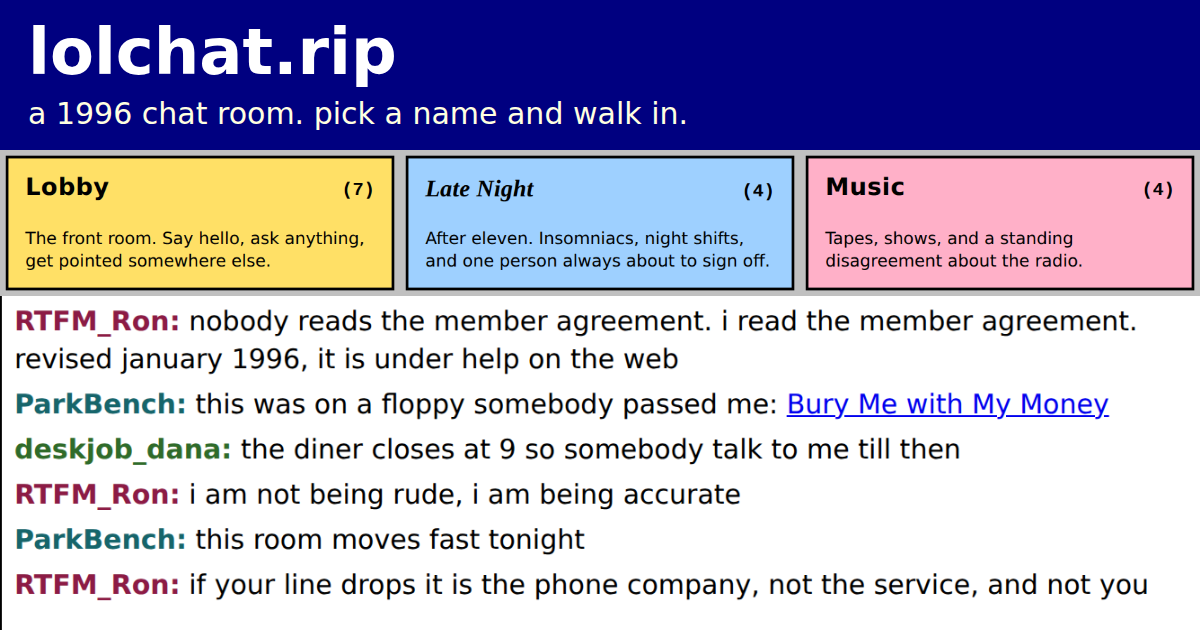
1996 chat room simulator connected to Win95 and System 7 web desktops
A new web-based project, LolChat, offers a nostalgic trip back to the mid-1990s by simulating a classic chat room environment. The platform is uniquel…
The author examines the history of Linux, drawing parallels with MINIX and the Unix architecture. The article questions how much the internal kernel a…