
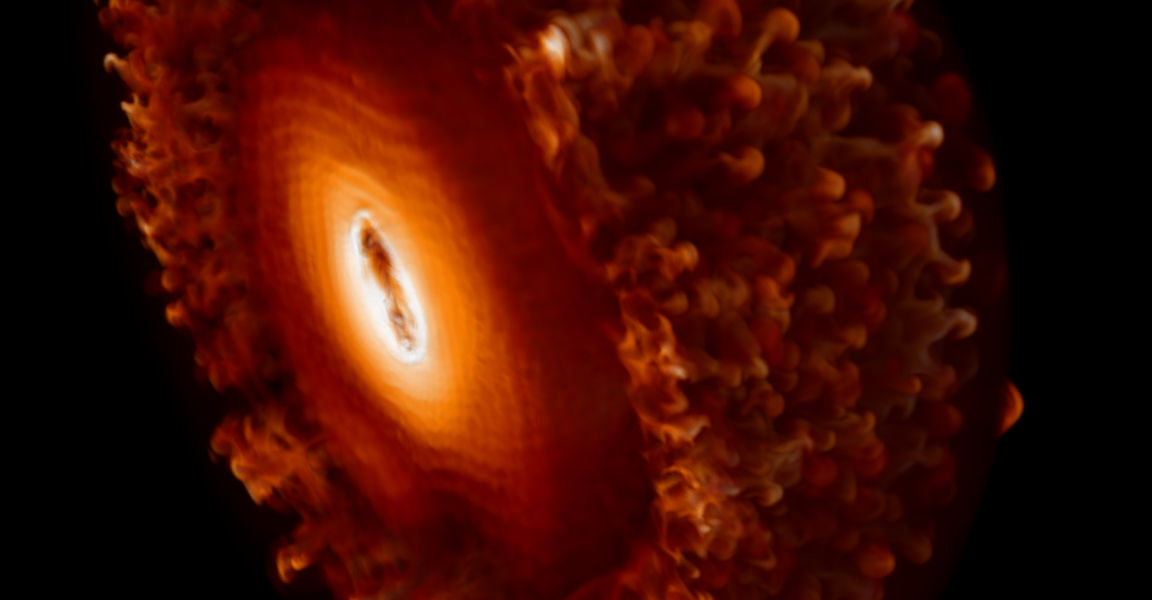
A new study published in Physical Review D explores the role of neutrino flavor oscillations in core-collapse supernovae. While current astrophysical models successfully explain the general mechanism of stellar collapse, they often struggle to account for observed statistical discrepancies. Researchers suggest that the phenomenon of neutrinos swapping identities—a quantum mechanical process—may be a missing link in these models. Neutrinos are crucial to the energy dynamics of a collapsing star, yet traditional simulations frequently overlook their flavor-changing capabilities. By incorporating these oscillations, scientists hope to refine the theoretical framework of how massive stars end their lives, potentially resolving long-standing uncertainties regarding whether every core collapse results in a visible supernova. This research highlights the complexity of particle physics in extreme environments and suggests that the 'details' of neutrino behavior could fundamentally alter our understanding of the most violent events in the universe.
This is a summary. Read the full article at the original source:
Ars TechnicaRelated stories

Researchers at Stanford University, led by neuroscientist Sergiu Pașca, have successfully integrated human brain organoids into the brains of genetica…

A recent study published in Frontiers in Psychology reveals that chimpanzees actively teach their offspring how to use tools through social learning.…

NASA has announced that the Nancy Grace Roman Space Telescope is expected to remain operational for at least 22 years, doubling the agency's initial m…