
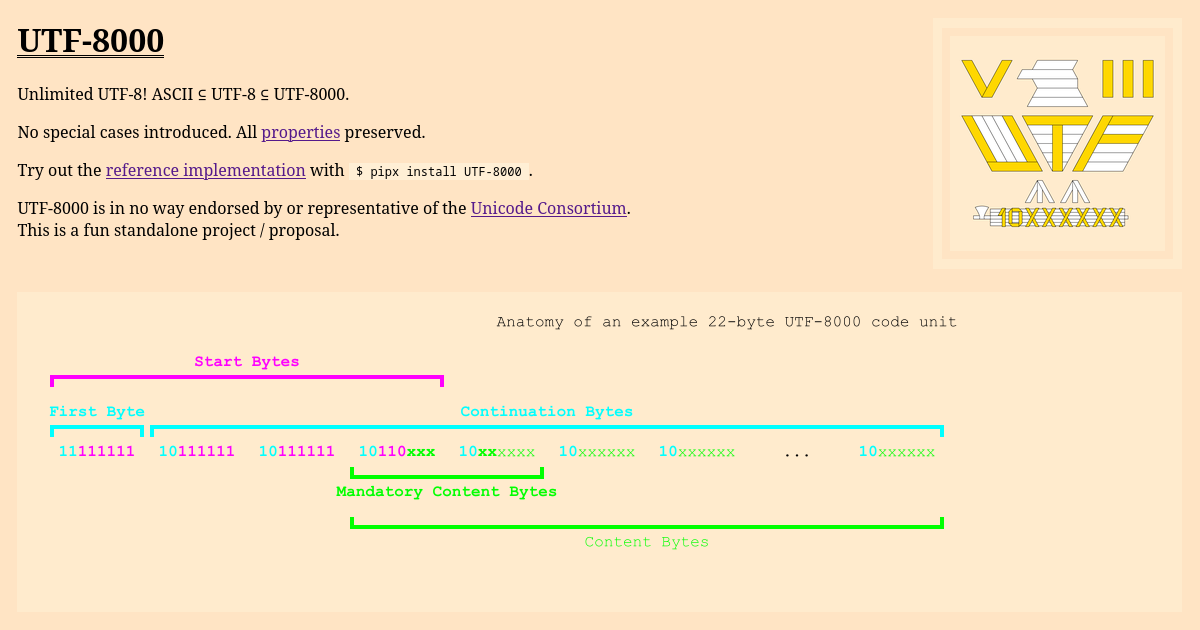
UTF-8000 is a novel technical project that explores the concept of expanding the limitations of the standard UTF-8 character encoding system. While the traditional UTF-8 standard is restricted to a specific range of code points defined by the Unicode Consortium, this project proposes an experimental approach to handle an theoretically unlimited set of characters. By pushing the boundaries of how character data is structured and interpreted, UTF-8000 aims to provide developers with a more flexible framework for encoding diverse and non-standard data sets. The project is currently being discussed within the developer community, with early adopters examining its potential implications for data storage, legacy system compatibility, and future-proofing digital text representation. As an open-source initiative, it invites contributions and critical analysis regarding the feasibility of such an extension in real-world applications, challenging the established norms of character encoding protocols used across the global internet infrastructure.
This is a summary. Read the full article at the original source:
Hacker News (YC)Related stories
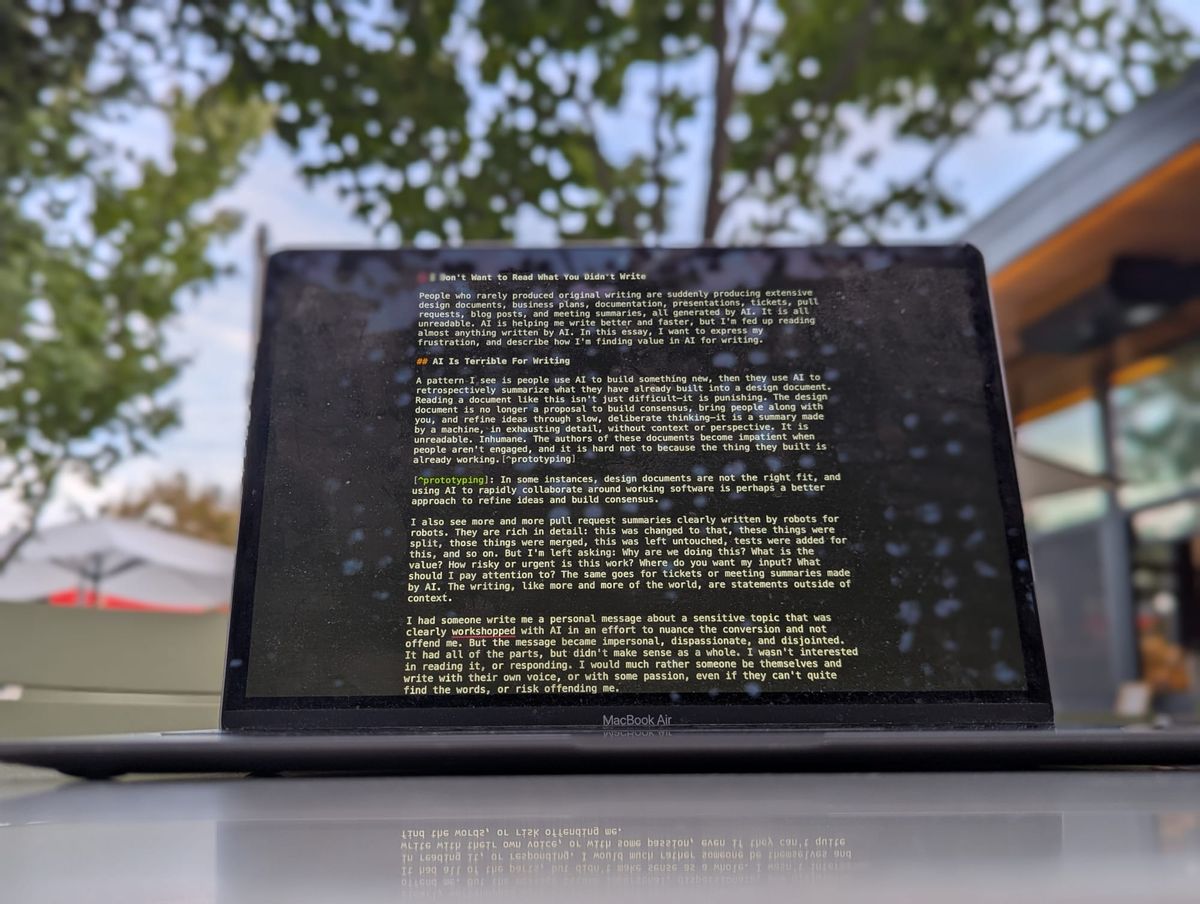
In his recent blog post, Colin Breck addresses the growing trend of using Large Language Models (LLMs) to generate technical content. Breck argues tha…
The creator of the 'Giga Pisar' application, built on Sber's GigaAM speech recognition technology, has summarized the first week following their debut…

This Habr article explores the computer as a fundamental mathematical structure, inviting readers to view computational processes through the lens of…