
Understanding Claude Code Hooks: Why Exiting 1 Fails to Block Commands

A recent technical guide highlights a common misconception regarding Claude Code hooks: exiting with a status of 1 does not actually block command execution. According to the official documentation, only an exit code of 2 triggers a blocking error in the PreToolUse flow. The author explains that when a hook exits 1, it is merely logged as an error, allowing the underlying command to proceed. To effectively implement security guards, developers must use exit code 2 and provide descriptive error messages via stderr, which Claude then interprets as instructions. The article provides a robust bash template for creating reliable hooks, emphasizing the importance of testing with near-miss scenarios and ensuring that hooks are properly configured within the .claude/settings.json file. By following these practices, developers can create meaningful safeguards that prevent unintended actions while providing clear feedback to the AI agent.
This is a summary. Read the full article at the original source:
Dev.toRelated stories

The code was never the point: Hacktoberfest, AI, and the value of the climb
Hacktoberfest has officially moved away from counting pull requests, signaling a shift in how the open-source community values contributions in the ag…

Six CLAUDE.md files, six codewords: three at launch, two after a Read, one behind an env var
A recent technical investigation by Rulestack explores how Claude Code handles CLAUDE.md files across different directory structures. By placing uniqu…
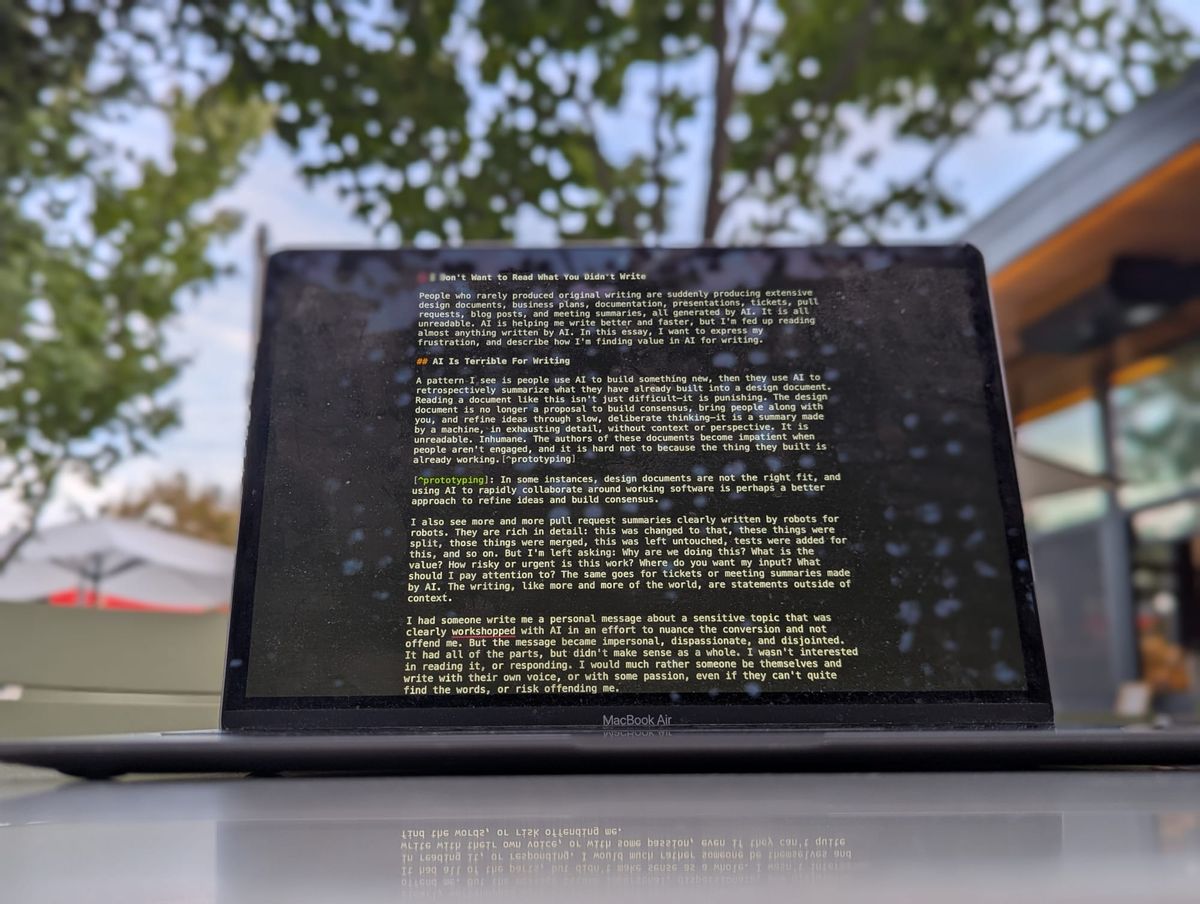
In his recent blog post, Colin Breck addresses the growing trend of using Large Language Models (LLMs) to generate technical content. Breck argues tha…