

In a candid reflection on building JAZZ, a Linux-based desktop environment tailored for AI engineering, the developer shares the technical hurdles encountered during the project's lifecycle. The journey was marked by significant challenges, including filesystem corruption that rendered a primary machine unbootable, the complexities of cloud GPU performance testing, and the realization that his development environment relied on hidden, hardcoded assumptions. By attempting to install the system on a clean, secondary laptop, the author uncovered seven critical dependency and configuration issues that were previously obscured. This iterative process of debugging and refining the installation process proved essential for the project's reliability. The author emphasizes that these failures were not setbacks but necessary steps in creating a robust, reproducible system. The JAZZ project is now open-source, with the developer inviting community feedback to further improve the platform's stability and usability.
This is a summary. Read the full article at the original source:
Dev.toRelated stories
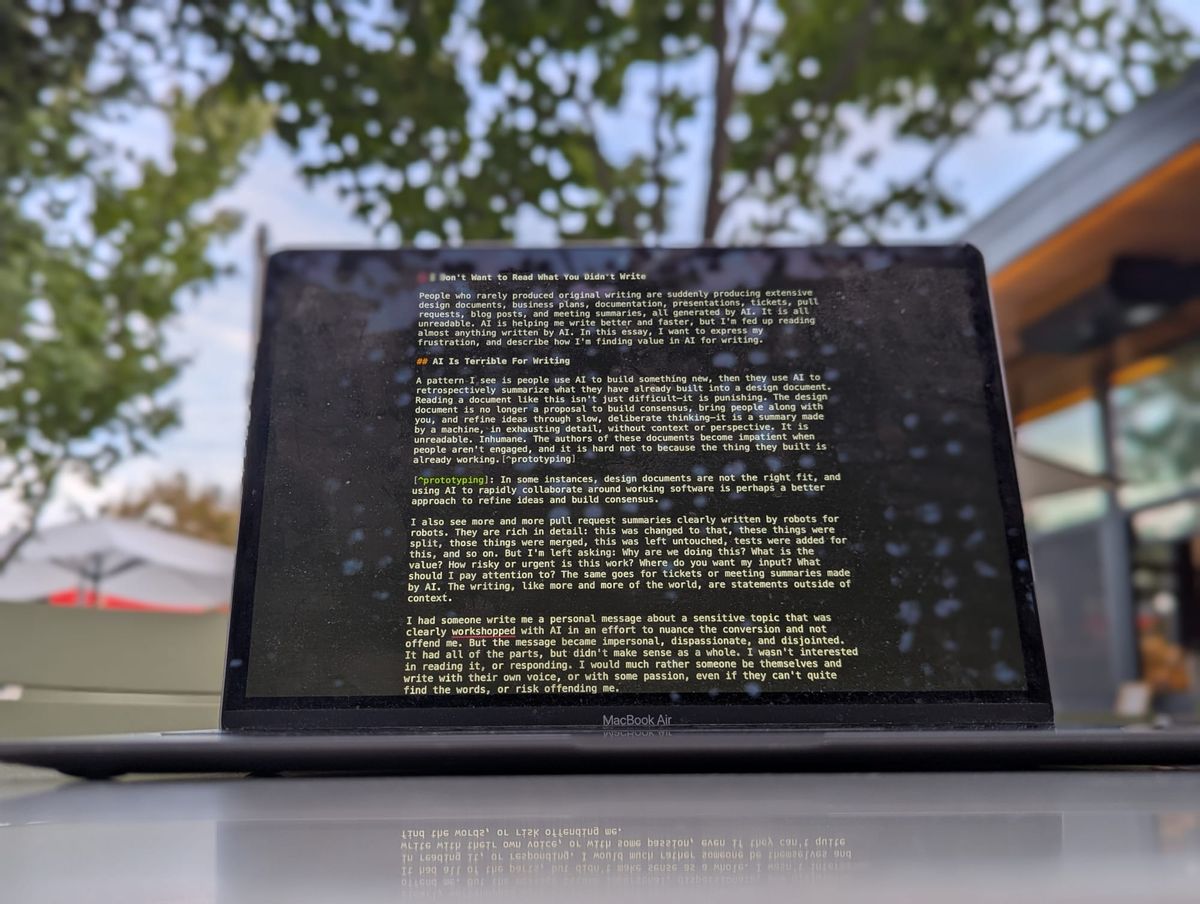
In his recent blog post, Colin Breck addresses the growing trend of using Large Language Models (LLMs) to generate technical content. Breck argues tha…
The creator of the 'Giga Pisar' application, built on Sber's GigaAM speech recognition technology, has summarized the first week following their debut…

This Habr article explores the computer as a fundamental mathematical structure, inviting readers to view computational processes through the lens of…