
In his latest post, Will Keleher explores the fundamental evolution of human-computer interaction, moving from traditional programming paradigms to the emerging era of intent-based computing. Keleher discusses how modern tools, particularly Large Language Models, are shifting the burden of implementation from the user to the machine. By simply describing a desired outcome, users can now leverage AI to generate the necessary code or execute complex workflows that previously required significant technical expertise. The article reflects on the implications of this shift for software development, suggesting that the future of computing lies in natural language instructions rather than rigid syntax. Keleher argues that while this lowers the barrier to entry for many tasks, it also necessitates a deeper understanding of how to effectively prompt and guide these systems to achieve reliable results. This transition marks a significant milestone in how we bridge the gap between human intent and machine execution.
This is a summary. Read the full article at the original source:
Hacker News (YC)Related stories
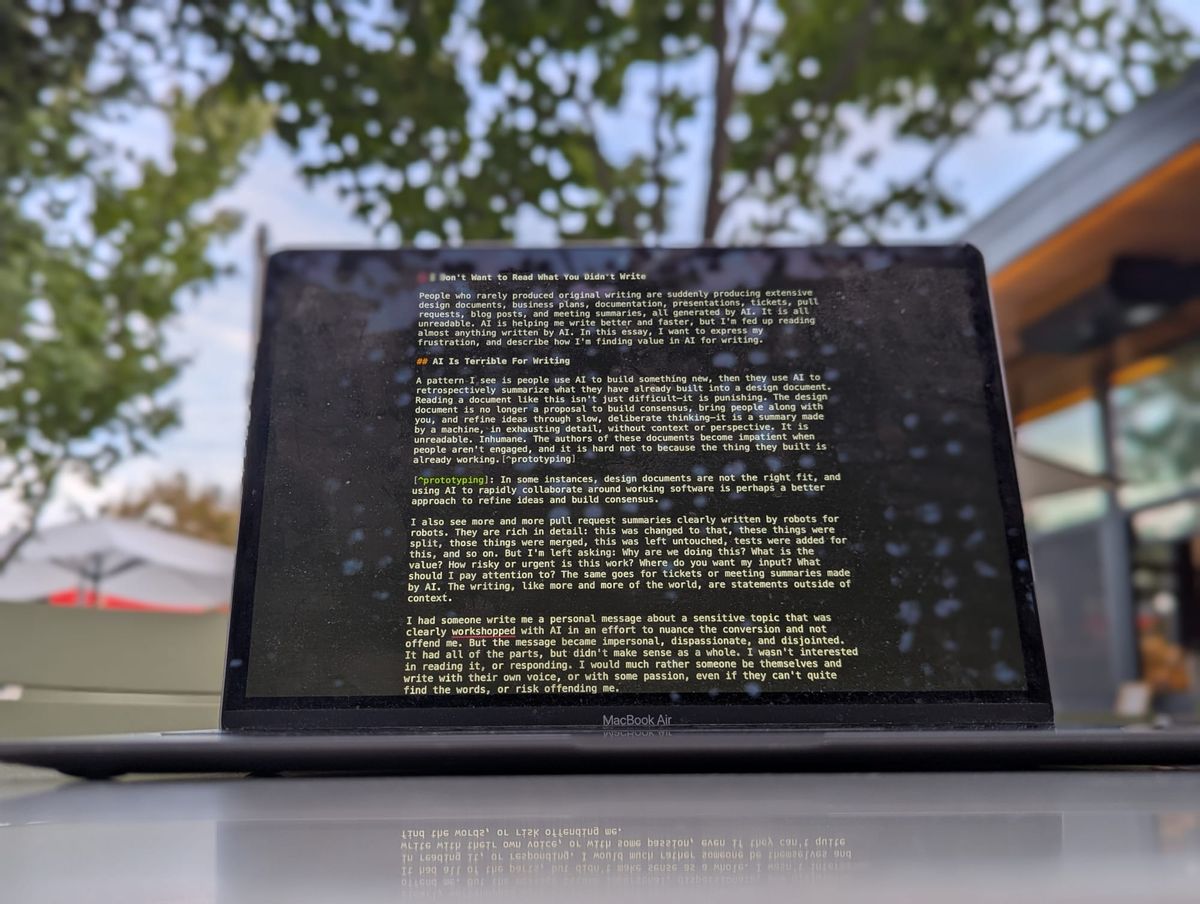
In his recent blog post, Colin Breck addresses the growing trend of using Large Language Models (LLMs) to generate technical content. Breck argues tha…
The creator of the 'Giga Pisar' application, built on Sber's GigaAM speech recognition technology, has summarized the first week following their debut…

This Habr article explores the computer as a fundamental mathematical structure, inviting readers to view computational processes through the lens of…