
Surviving the 200k-Token Lobotomy: How Unix init.d and 'Memento' Made My AI Coding Agent Immune to Context Compaction

As AI coding agents handle increasingly complex tasks, they often hit context window limits, triggering 'context compaction'—a process where the host model summarizes the conversation into a brief prose overview. The author argues this is a 'prefrontal lobotomy' for agents, as it strips away the specific architectural invariants and governance rules required for software engineering. To solve this, the author implements a system inspired by the film Memento and 1983 Unix init.d boot scripts. By maintaining a directory of lexically ordered, immutable state files (00_governance.md to 99_next_action.md), the agent can reconstruct its exact state after a memory reset. Furthermore, the author advocates for a 'Make-Fork' architecture, where a primary orchestrator spawns ephemeral subagents to handle heavy tasks, ensuring the main process remains lightweight and immune to the pitfalls of monolithic context bloat.
This is a summary. Read the full article at the original source:
Dev.toRelated stories

I don't want to upload my documents to online services. So I compress PDFs directly in the browser
The author faced the need to compress PDF documents for an embassy application while raising privacy concerns regarding third-party online services. E…
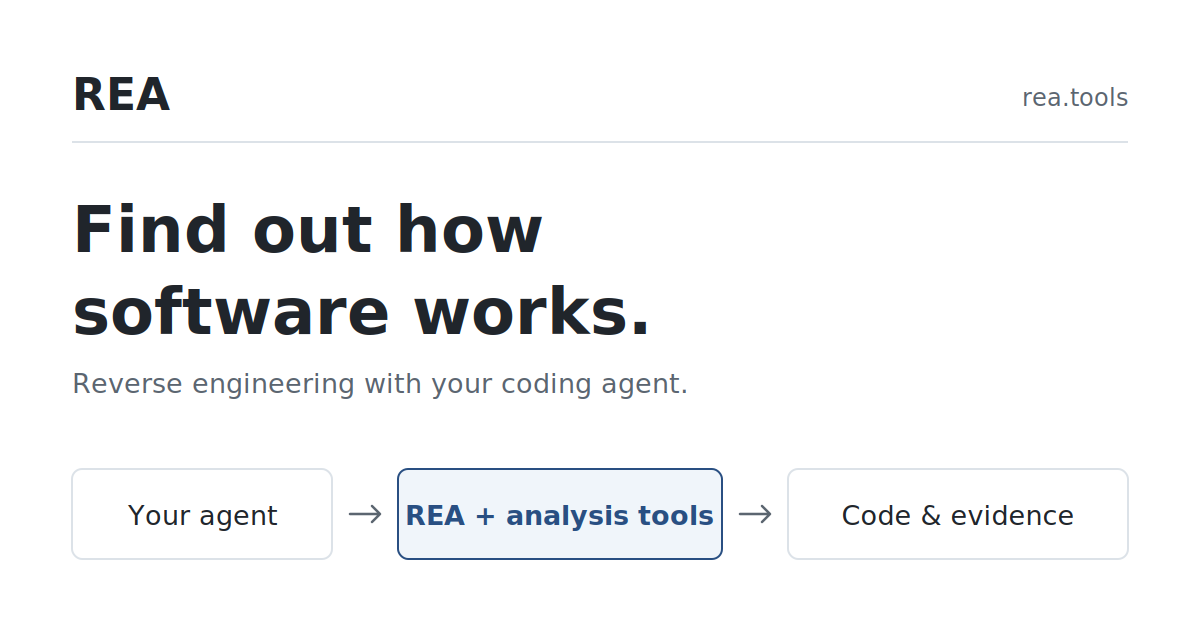
REA Reverse has emerged as a new platform designed to simplify the complex process of reverse engineering. The tool aims to provide developers and sec…

Eurydice is a new tool designed to translate Rust code into human-readable C, aiming to bridge the gap between memory-safe Rust and legacy C-based sys…