
The server was needed for just one header: a Dart port, a future that waits for itself, and a loader without ffmpeg

The author shares their experience optimizing an anime video player that initially required a server-side proxy to bypass browser restrictions. When porting the project to Android, it became clear that the network limitations were imposed by the browser environment rather than the protocols themselves. During the migration from Python to Dart, the author encountered several technical challenges, ranging from rewriting library logic to discovering specific bugs, including a self-awaiting future in Dart and nuances of arrow functions. The article also discusses replacing ffmpeg with a custom loader and automating the release signing process. This piece provides a deep technical analysis of the application migration process, demonstrating how rethinking architecture can eliminate unnecessary server overhead and simplify the client side, making it more autonomous and efficient in a mobile environment.
This is a summary. Read the full article at the original source:
HabrRelated stories
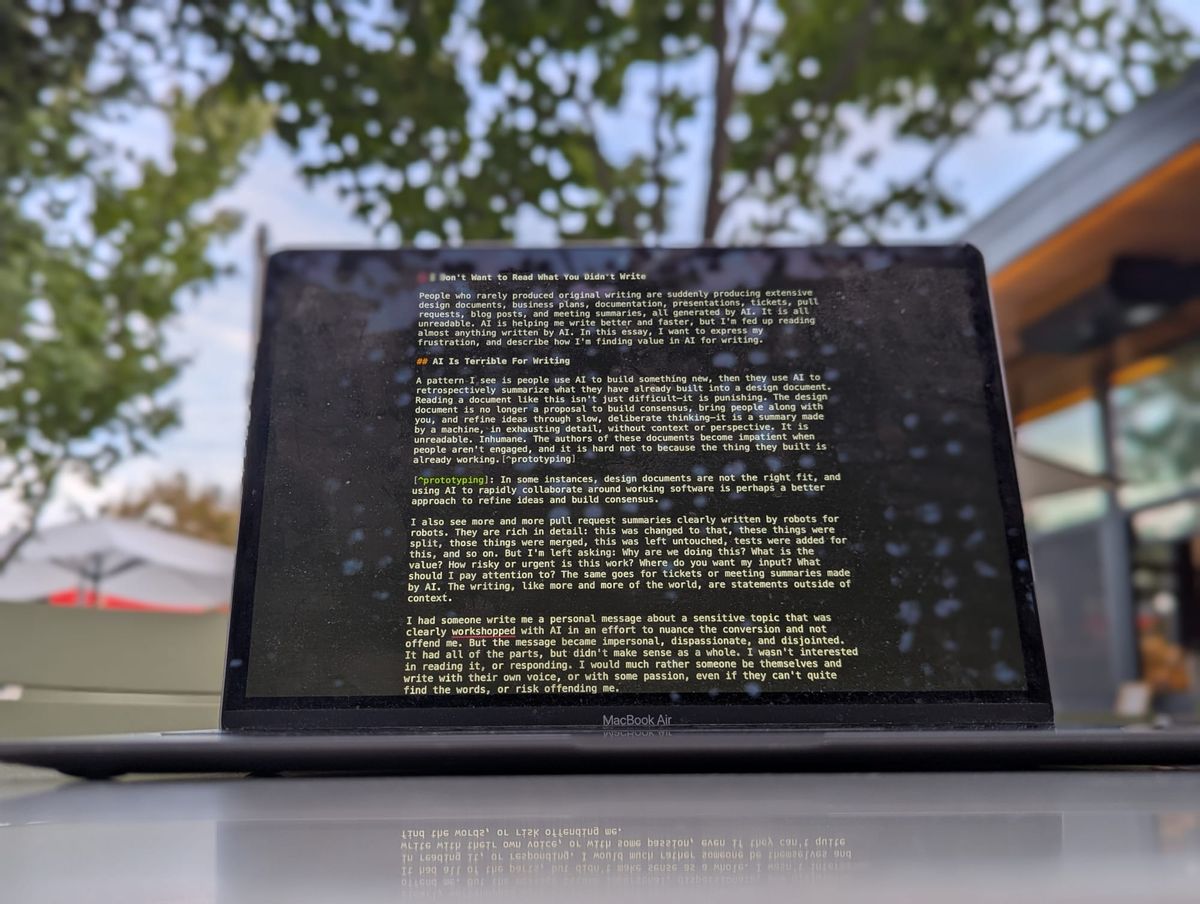
In his recent blog post, Colin Breck addresses the growing trend of using Large Language Models (LLMs) to generate technical content. Breck argues tha…
The creator of the 'Giga Pisar' application, built on Sber's GigaAM speech recognition technology, has summarized the first week following their debut…

This Habr article explores the computer as a fundamental mathematical structure, inviting readers to view computational processes through the lens of…