
In his latest blog post, Jeppe Pedersen explores the growing intersection between scientific research and open-source software development. He argues that modern scientific inquiry is increasingly dependent on complex codebases, making the principles of open source—transparency, reproducibility, and collaborative improvement—essential for the future of scientific discovery. Pedersen highlights that when scientific research relies on proprietary or opaque software, it hinders the ability of the broader community to verify results or build upon existing work. By treating scientific code as open-source software, researchers can foster a more robust ecosystem where peer review extends beyond the paper to the underlying implementation. The post advocates for a shift in academic culture, urging institutions to prioritize open-source practices to ensure that scientific progress remains accessible, verifiable, and truly collaborative in an era where software is the primary engine of innovation.
This is a summary. Read the full article at the original source:
Hacker News (YC)Related stories
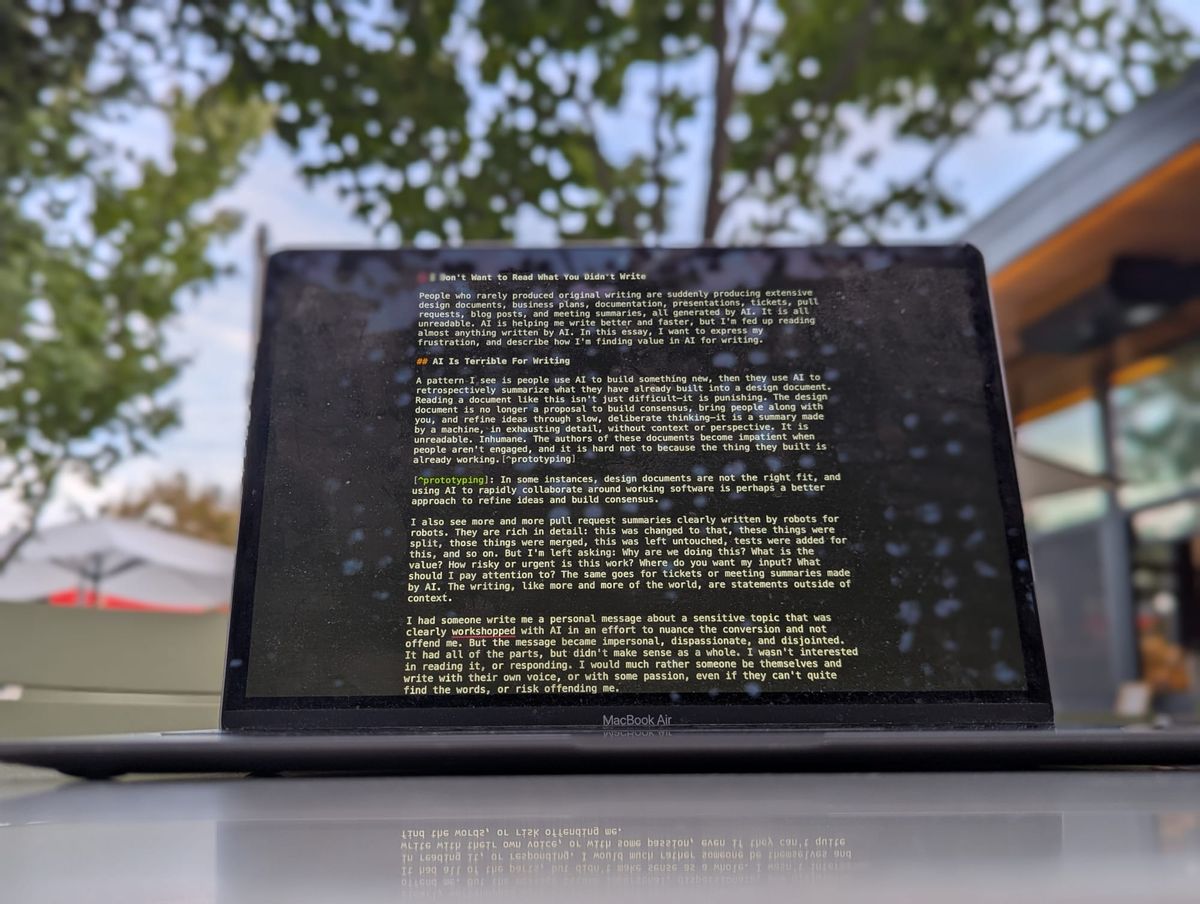
In his recent blog post, Colin Breck addresses the growing trend of using Large Language Models (LLMs) to generate technical content. Breck argues tha…
The creator of the 'Giga Pisar' application, built on Sber's GigaAM speech recognition technology, has summarized the first week following their debut…

This Habr article explores the computer as a fundamental mathematical structure, inviting readers to view computational processes through the lens of…