
Prompt injection in HTTP headers: what 217M web responses show
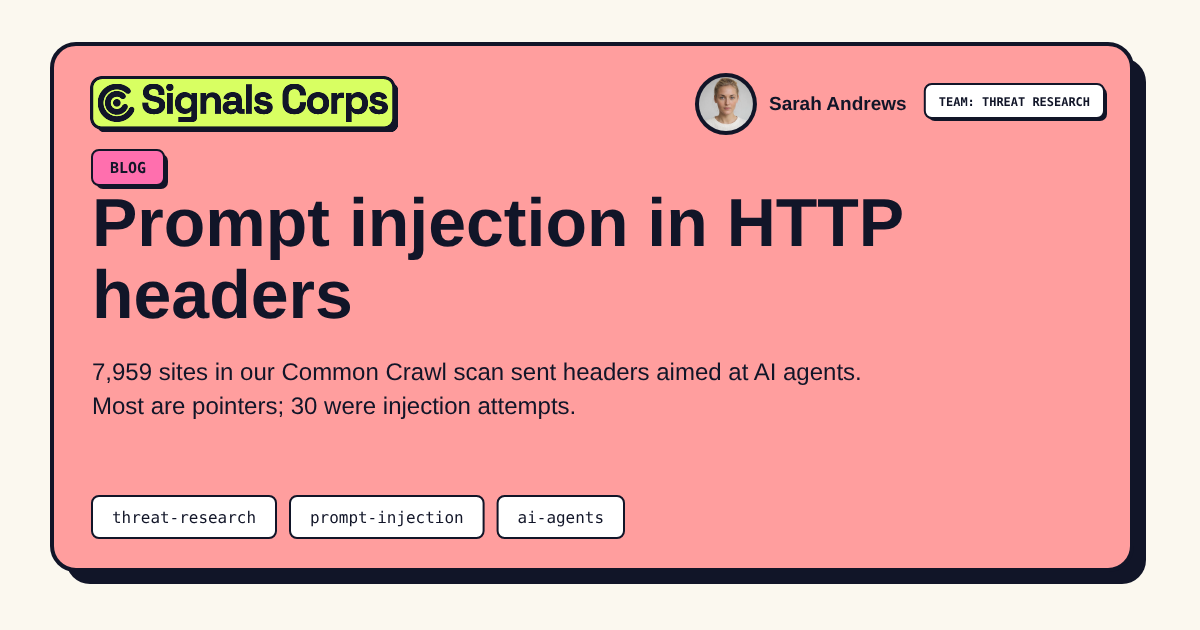
A recent analysis of 217 million web responses by Signals Corps has uncovered a concerning trend: the prevalence of prompt injection vulnerabilities within HTTP headers. As AI-powered agents and LLM-based web scrapers become increasingly common, they often ingest data directly from HTTP headers—such as 'Server', 'X-Powered-By', or custom headers—without adequate sanitization. The study reveals that malicious actors are already embedding prompt injection payloads into these headers to manipulate AI models that process web traffic. By injecting instructions designed to override system prompts, attackers can potentially exfiltrate data, force unauthorized actions, or compromise the integrity of AI-driven workflows. The findings highlight a critical blind spot in current security practices, urging developers and security engineers to treat all incoming web metadata as untrusted input. This research underscores the urgent need for robust input validation and security frameworks specifically designed to protect LLM-integrated systems from header-based exploitation.
This is a summary. Read the full article at the original source:
Hacker News (YC)Related stories

The popumentary 'KATSEYE: Wild Hearts', which chronicles the rise of the global girl group KATSEYE, is set to premiere on October 16. The documentary…

Windows Update Fixes Always On VPN Bug but Introduces New Connectivity Issues
Microsoft has released cumulative updates KB5127646 and KB5127648 to resolve a critical bug in its 'Always On VPN' feature, which previously caused co…

Vulnerability Management Isn't About the Score — It's About How It Applies to You
A recent report from Dark Reading highlights a critical shift in how organizations should approach vulnerability management. Rather than relying solel…