
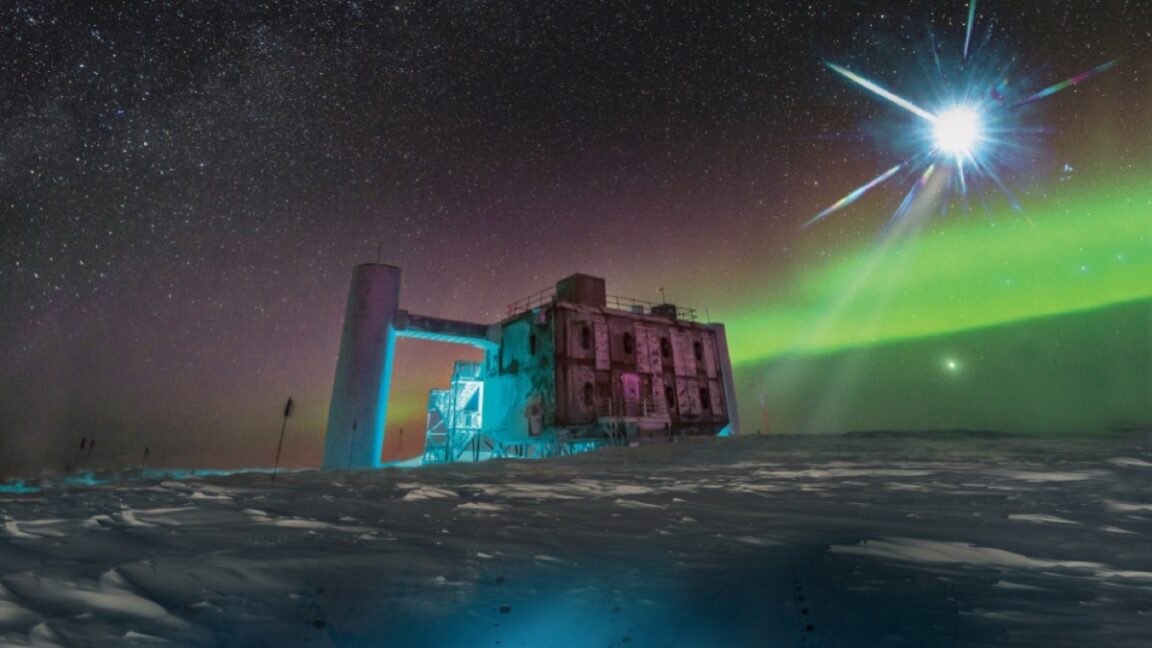
Francis Halzen, a physicist at the University of Wisconsin, Madison, has been awarded the 2026 Nobel Prize in Physics. The honor recognizes his decisive contributions to the IceCube Neutrino Observatory in Antarctica and his role in the discovery of high-energy neutrinos of astrophysical origin. Halzen led the development of the observatory, which allows scientists to detect neutrinos originating from the distant universe. During a news conference in Stockholm, Halzen expressed surprise at the recognition, emphasizing that the achievement was the result of a massive collaborative effort. He credited the success to the courageous and talented researchers who joined the project during its early stages when the concept was considered unconventional by the broader physics community. The award highlights the significant impact of IceCube on our understanding of high-energy cosmic phenomena.
This is a summary. Read the full article at the original source:
Ars TechnicaRelated stories

Russian health authorities are currently investigating the death of a laboratory worker to determine if the plague was a contributing factor. The inci…

In a recent interview, Nobel laureate Kip Thorne discussed key milestones in his career, including his work on the LIGO project and the detection of g…

A low-pressure system currently developing in the Western Gulf of Mexico is expected to intensify into a tropical storm, with meteorological models su…