
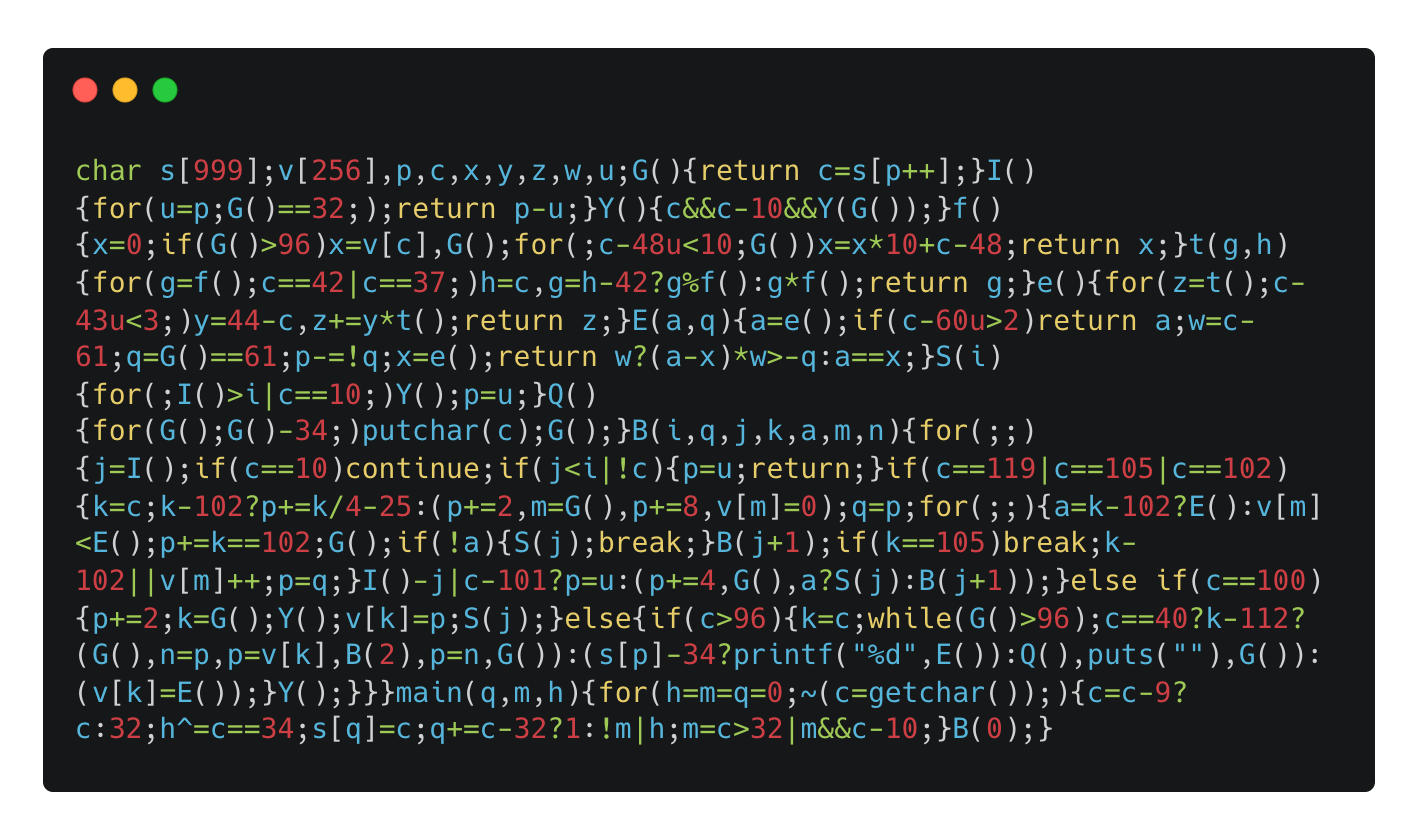
In this technical deep dive, Austin Henley explores the constraints and creative engineering required to build a functional Python interpreter within a strict 1024-byte limit. The article documents the journey of implementing a subset of the Python language, focusing on how to handle bytecode, stack management, and basic language features while adhering to the extreme size limitation. Henley breaks down the architectural decisions needed to minimize code footprint, including the use of compact data structures and efficient parsing techniques. By stripping away non-essential features and optimizing the core execution loop, the project serves as an educational case study on language design and low-level programming. This experiment highlights the beauty of minimalist software engineering, demonstrating that even complex high-level languages can be distilled into remarkably small executable formats when pushed to their absolute limits.
This is a summary. Read the full article at the original source:
Hacker News (YC)Related stories

In a recent exploration of modern development, developer Erikch examines whether coding agents should influence the choice of software libraries. As A…

Can the universe fit on an infinite canvas? Or where does 'entanglement' actually live?
The author continues a series of articles on the development of the Plyra prototype, a tool for managing complex and entangled knowledge, positioned a…

I stored Tailwind classes in the database. After the build, half of the styles disappeared
The author shares their experience with a non-standard technical challenge: storing raw HTML with Tailwind CSS classes directly in a database. During…