
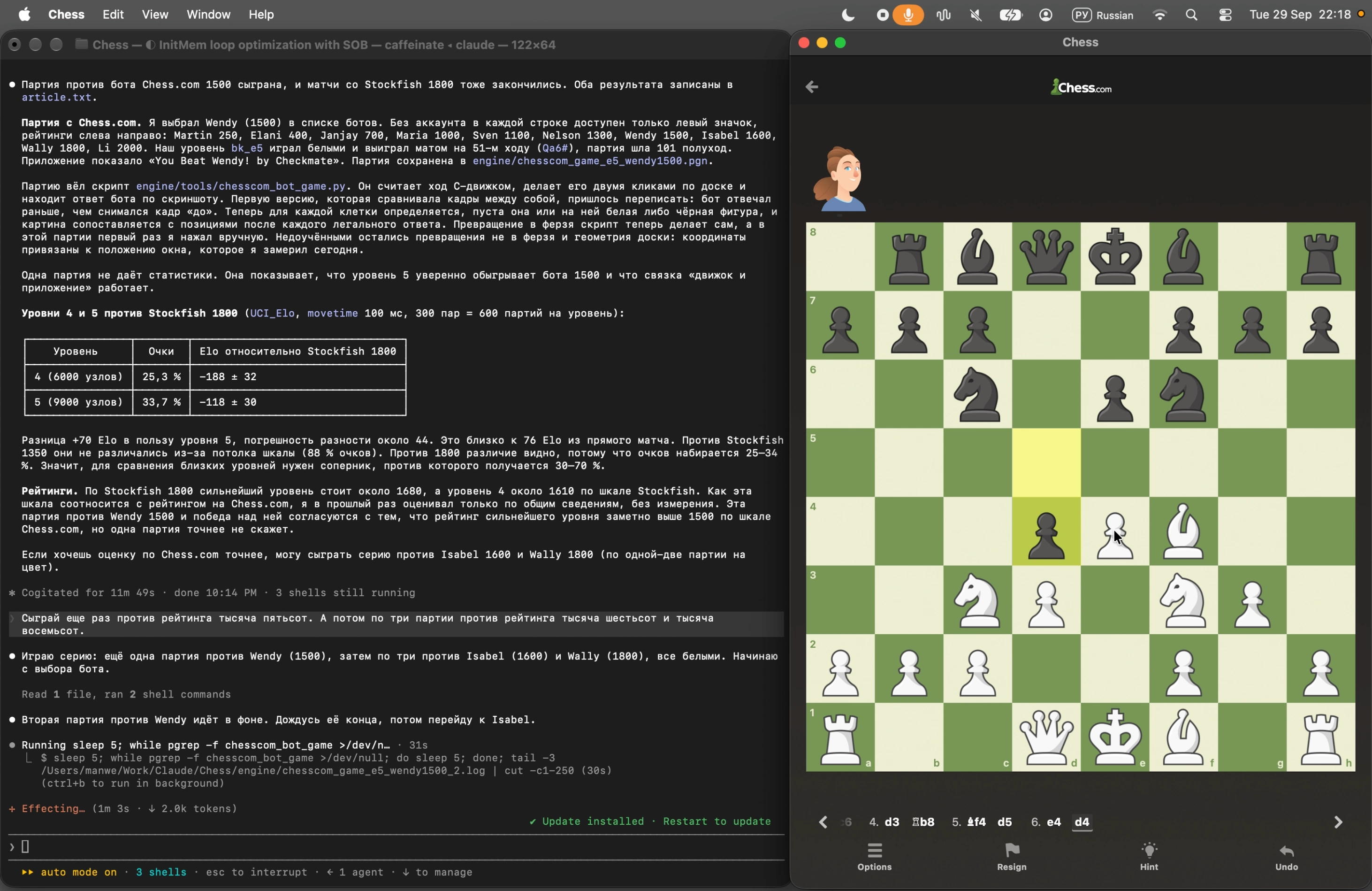
The author shares their experience in developing a high-performance chess engine that, despite its overall efficiency, faced inexplicable losses in specific game scenarios. Solving this required deep analysis of match data against competitors and fine-tuning algorithmic coefficients. During the process, the author concluded that using AI chats for direct code optimization was largely ineffective. However, neural networks proved to be an indispensable tool for writing automation scripts to control third-party software and for building specialized tools to analyze engine parameters. The article describes the methodology for testing, comparing versions, and iteratively improving algorithms, allowing game engine developers to better understand the debugging and optimization processes of complex systems in a highly competitive environment.
This is a summary. Read the full article at the original source:
HabrRelated stories

Dmitry Karlovsky has published an article focusing on the UX design challenges of Rich Text Editors. The author shares his experience in creating a to…

Saurabh Rob Dahal, a Developer Advocate at AWS, has released a practical workshop designed to help developers improve how they interact with AI coding…

Released on September 9, 2026, React 19.3 marks a significant milestone in the library's evolution, often overlooked when focusing solely on major ver…