
‘If we don’t like it, we’ll kill it. If we love it, we’ll marry it’: How ancient myths shaped modern AI
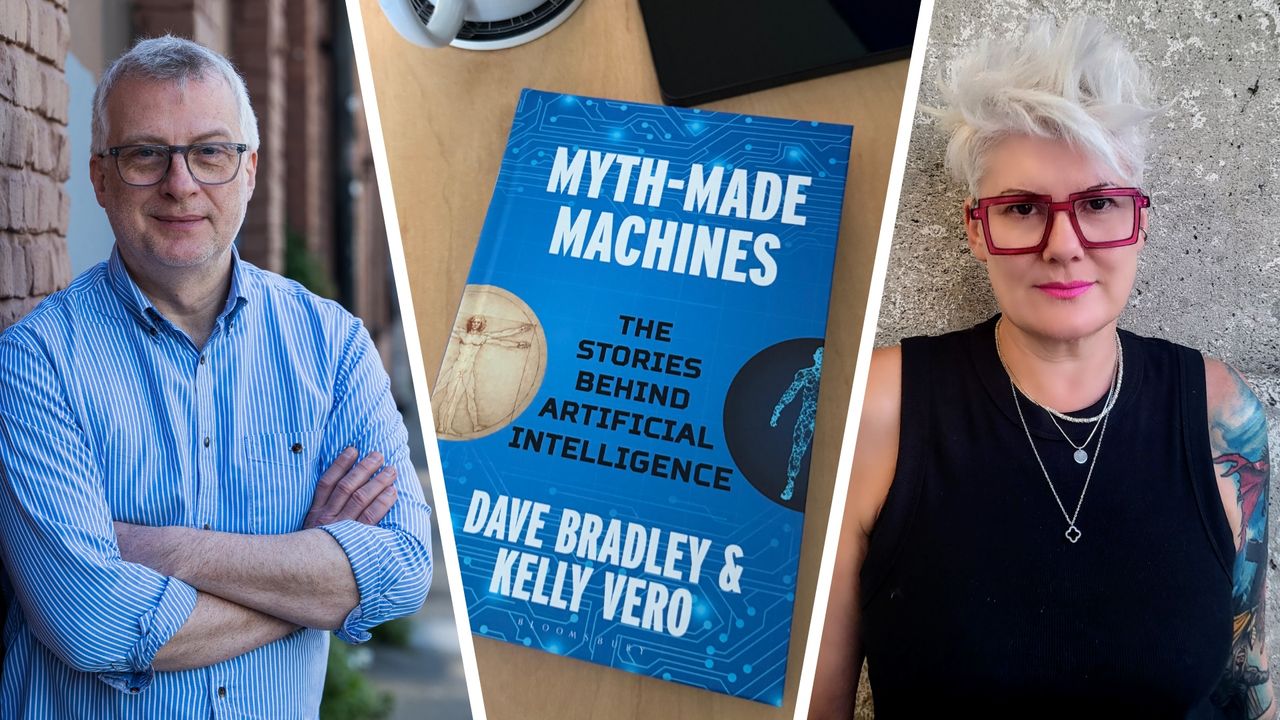
In their new book, Myth-Made Machines: The Stories Behind Artificial Intelligence, authors Dave Bradley and Kelly Vero explore how humanity’s long-standing fascination with artificial life has influenced the development of modern AI. The authors argue that our current relationship with technology is deeply rooted in ancient narratives, ranging from Hephaestus’s mechanical servants in Greek mythology to the Golem of Jewish folklore. By tracing these themes through literature, film, and television, Bradley and Vero suggest that these stories have not merely predicted AI, but have actively shaped our expectations, fears, and the way we interact with generative models like ChatGPT. The book highlights how cultural tropes, such as the tendency to either reject or anthropomorphize machines, continue to dictate the trajectory of AI development, proving that our dreams of thinking machines are thousands of years older than the computers we use today.
This is a summary. Read the full article at the original source:
TechRadarRelated stories

Meta has unveiled its latest innovation, the Muse AI agent, designed to act as a highly personalized assistant for users. According to recent reports,…
What's going on with OpenAI and the Navier-Stokes controversy?
OpenAI has recently claimed a significant breakthrough in mathematics, specifically regarding the Navier-Stokes equations, which describe the motion o…

Large language models develop novel social biases through adaptive exploration
A recent research paper published on OpenReview explores how large language models (LLMs) can acquire and manifest new social biases during the proces…