
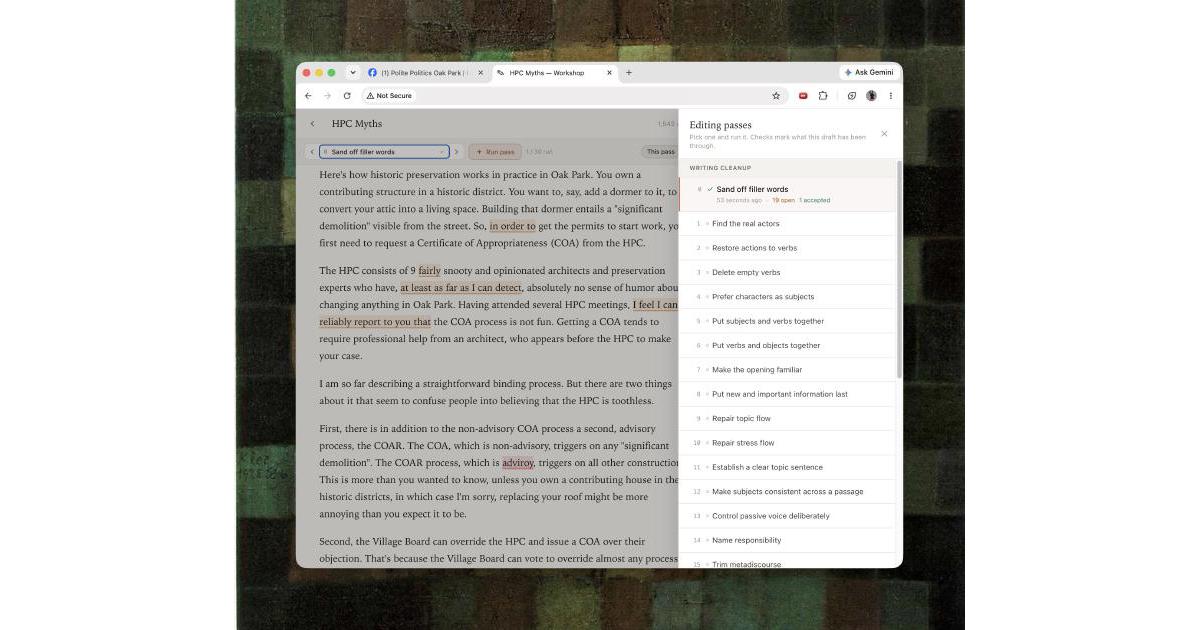
In his latest post, security researcher Thomas Ptacek explores the practical nuances of integrating Large Language Models into the writing process. Rather than viewing LLMs as autonomous content generators, Ptacek argues for a collaborative approach where the human remains the primary architect of intent and structure. He details specific workflows for using AI to overcome writer's block, refine prose, and automate tedious editing tasks without sacrificing the author's unique voice. The article emphasizes that effective writing with an LLM requires iterative prompting and rigorous verification, treating the model as a sophisticated assistant rather than a replacement for critical thinking. By maintaining control over the narrative arc and factual accuracy, writers can leverage AI to enhance productivity while ensuring the final output remains authentic and coherent. This guide serves as a pragmatic framework for professionals looking to incorporate generative tools into their creative and technical writing workflows.
This is a summary. Read the full article at the original source:
Hacker News (YC)Related stories

As enterprises increasingly integrate autonomous AI agents into their workflows, a significant financial risk has emerged: unbounded consumption. Acco…

Stopping AI’s Runaway Dangers Will Take More Than Just Talk About P(doom)
In a recent guest column for CNET, author Jamie Bartlett explores the escalating risks associated with advanced artificial intelligence. Bartlett argu…

OpenAI forms math advisory group as its AI resolves more than 100 open problems
OpenAI has officially established a dedicated mathematical advisory group to oversee its ongoing research into advanced AI reasoning. This development…