
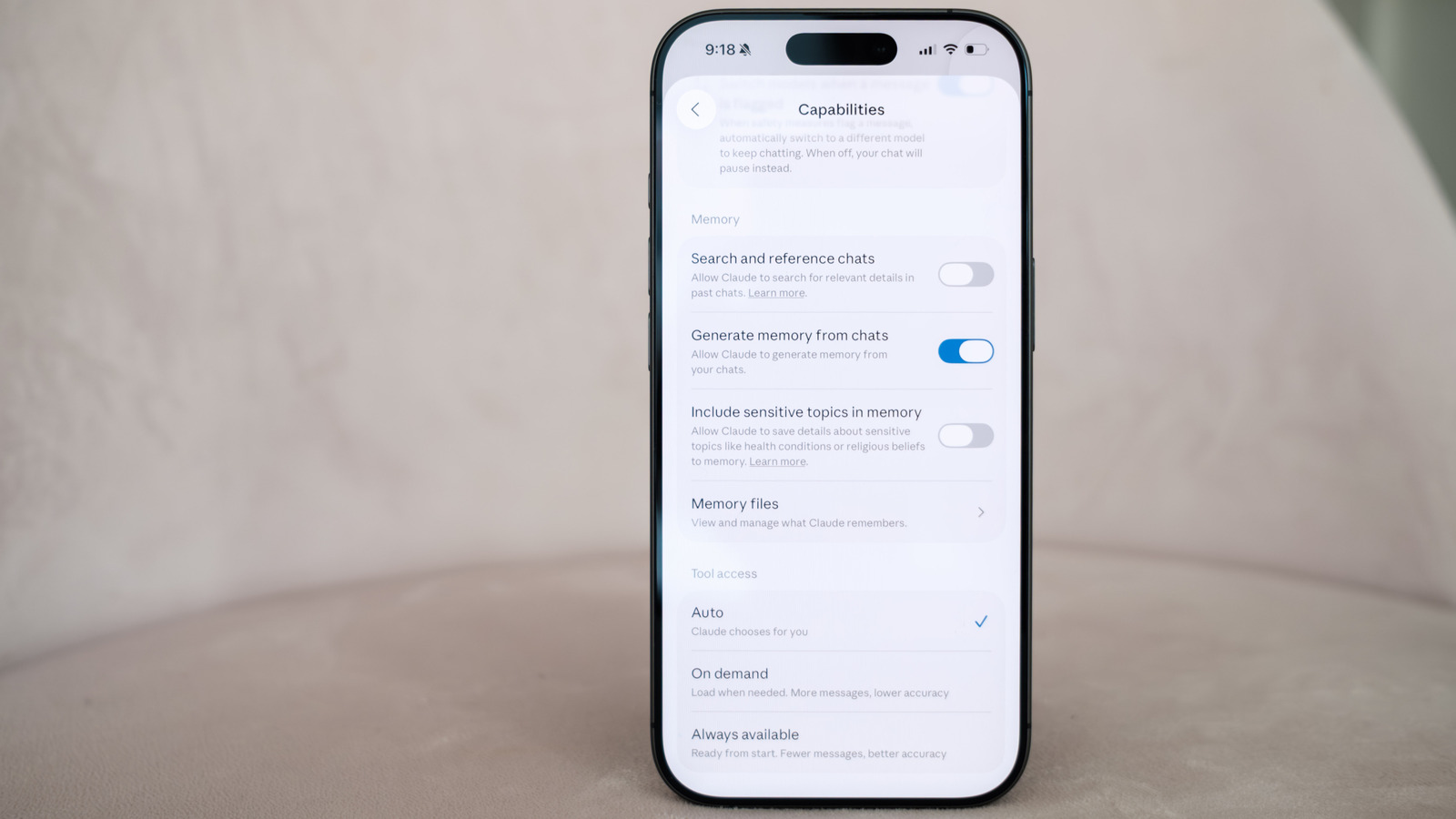
Anthropic's AI assistant, Claude, features a memory function that allows the model to retain information from previous conversations to provide more personalized and context-aware responses in future interactions. As the AI builds a profile based on user inputs, it is essential for users to manage this data to ensure accuracy and privacy. Users can view, edit, or delete specific details stored in Claude's memory through the settings menu. This capability is particularly useful for maintaining consistent preferences, such as professional tone, coding styles, or specific project requirements. By regularly reviewing the information Claude has saved, users can prevent the model from relying on outdated or incorrect data. This guide outlines the simple steps required to access the memory management interface, empowering users to maintain control over how the AI perceives and assists them over time.
This is a summary. Read the full article at the original source:
EngadgetRelated stories

Meta has unveiled its latest innovation, the Muse AI agent, designed to act as a highly personalized assistant for users. According to recent reports,…

What's going on with OpenAI and the Navier-Stokes controversy?
OpenAI has recently claimed a significant breakthrough in mathematics, specifically regarding the Navier-Stokes equations, which describe the motion o…

Large language models develop novel social biases through adaptive exploration
A recent research paper published on OpenReview explores how large language models (LLMs) can acquire and manifest new social biases during the proces…