
A Scientist Working on the ‘IceCube’ Neutrino Detector Explains the Nobel Prize–Winning Technology

Juan Carlos Díaz Vélez, a researcher associated with the IceCube Neutrino Observatory, provides an in-depth look at the complex technology behind detecting elusive cosmic particles. Neutrinos, often described as ghost particles, are notoriously difficult to observe, requiring massive detectors buried deep within the Antarctic ice. The IceCube project utilizes a vast array of sensors to capture the faint flashes of light produced when neutrinos interact with ice atoms. Díaz Vélez explains that this Nobel Prize-winning approach allows scientists to map the high-energy universe, offering insights into cosmic events that are otherwise invisible to traditional telescopes. By turning a cubic kilometer of ice into a massive particle detector, the team is effectively looking for a needle in a haystack, pushing the boundaries of modern physics and our understanding of the fundamental nature of the universe.
This is a summary. Read the full article at the original source:
WiredRelated stories
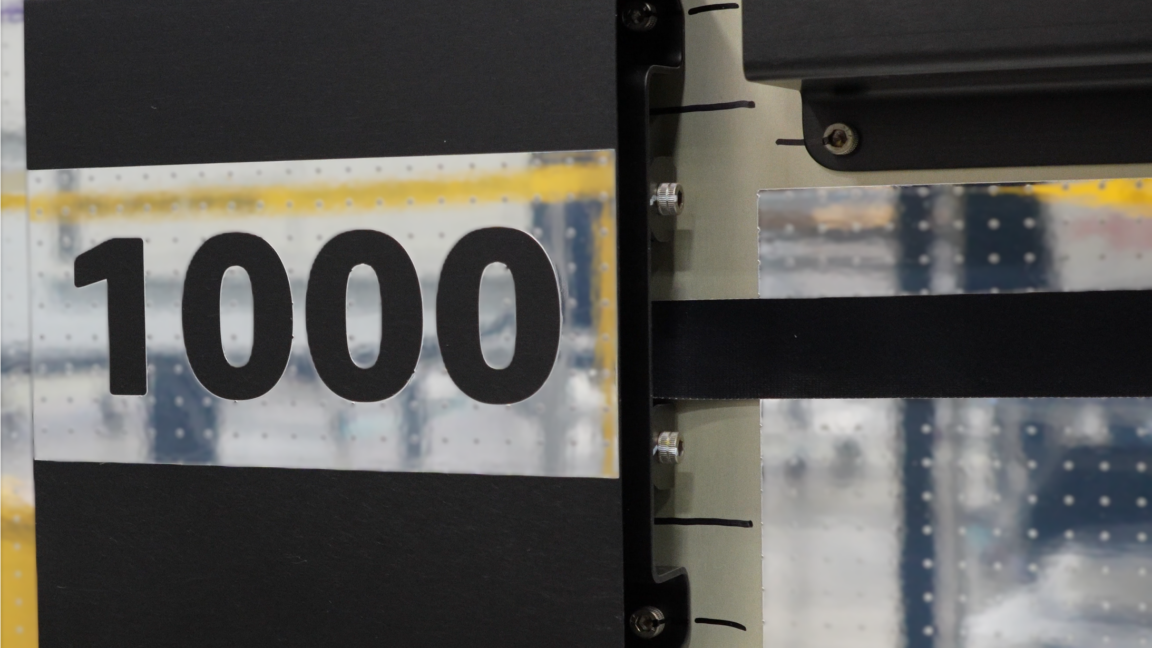
Amazon is nearing the launch of its satellite-based broadband internet service, having successfully manufactured its 1,000th satellite. The company ha…

Life Is Asymmetric: The Scientists Who Figured Out Why Won the 2026 Nobel Prize in Chemistry
Henri Kagan and Kensō Soai have been awarded the 2026 Nobel Prize in Chemistry for their groundbreaking work on molecular asymmetry. Their research ad…

In a recent discussion on Mathstodon, mathematician Terence Tao explores the evolving landscape of mathematical research, which he terms “Math 2.0.” T…